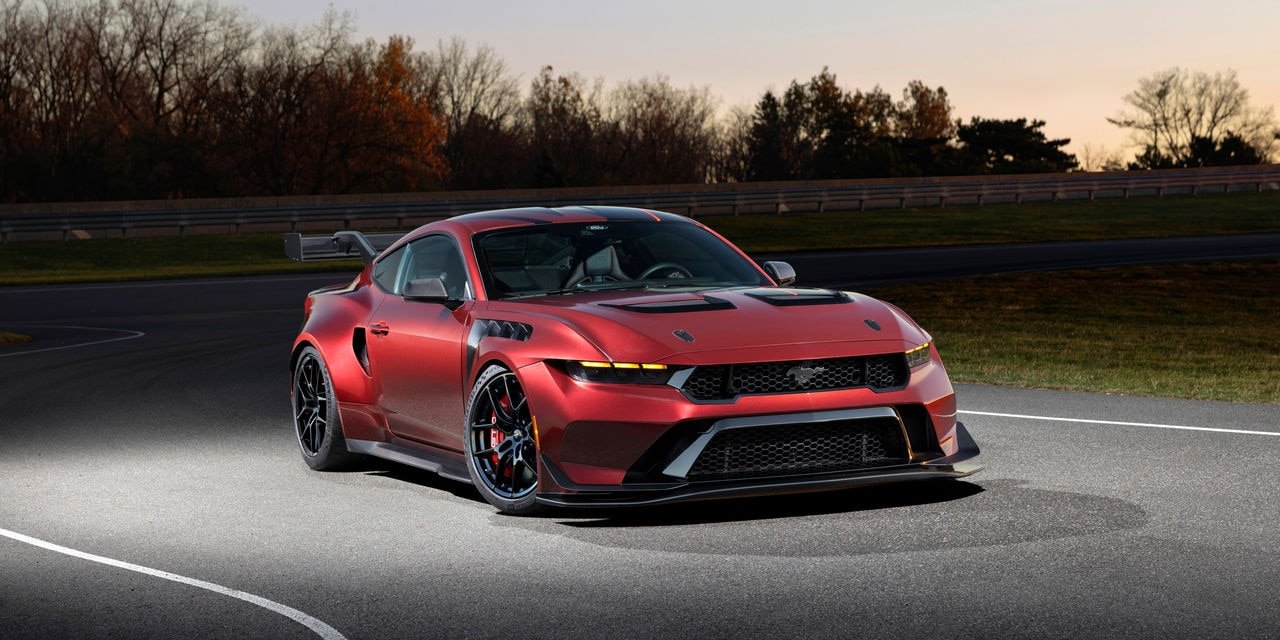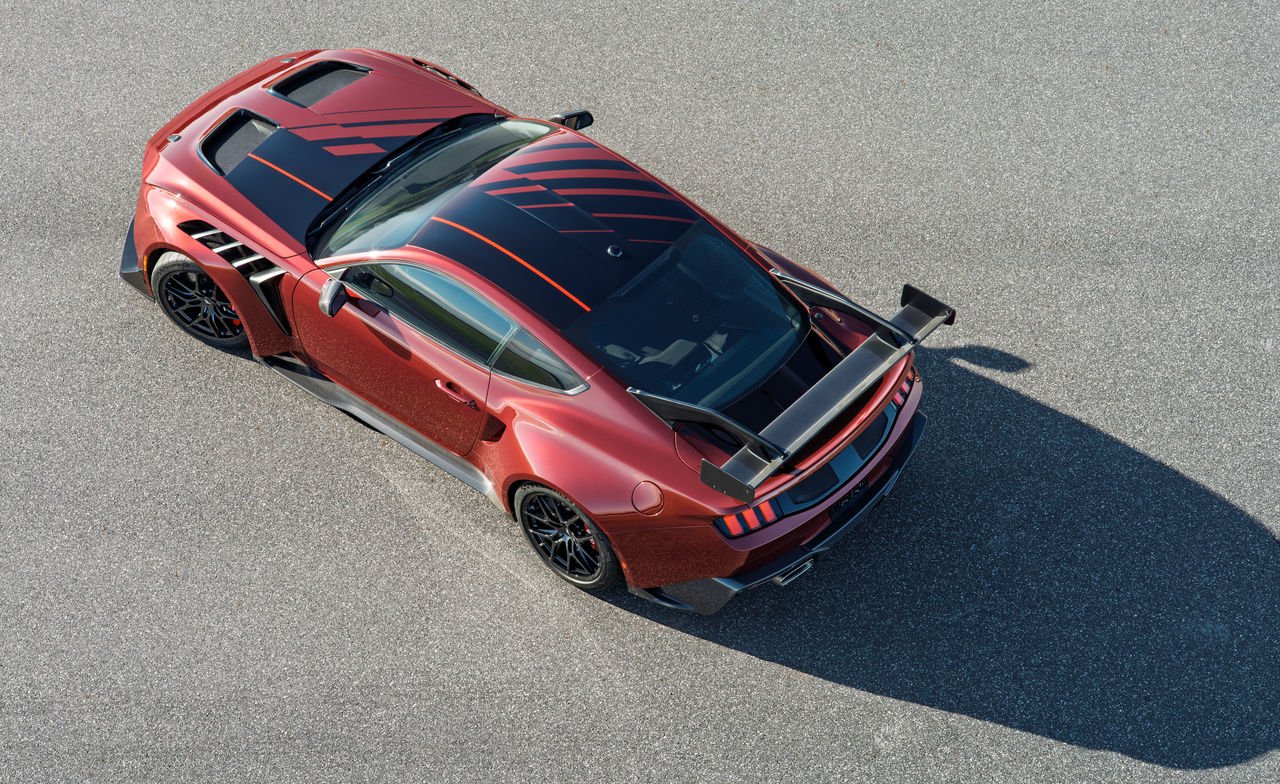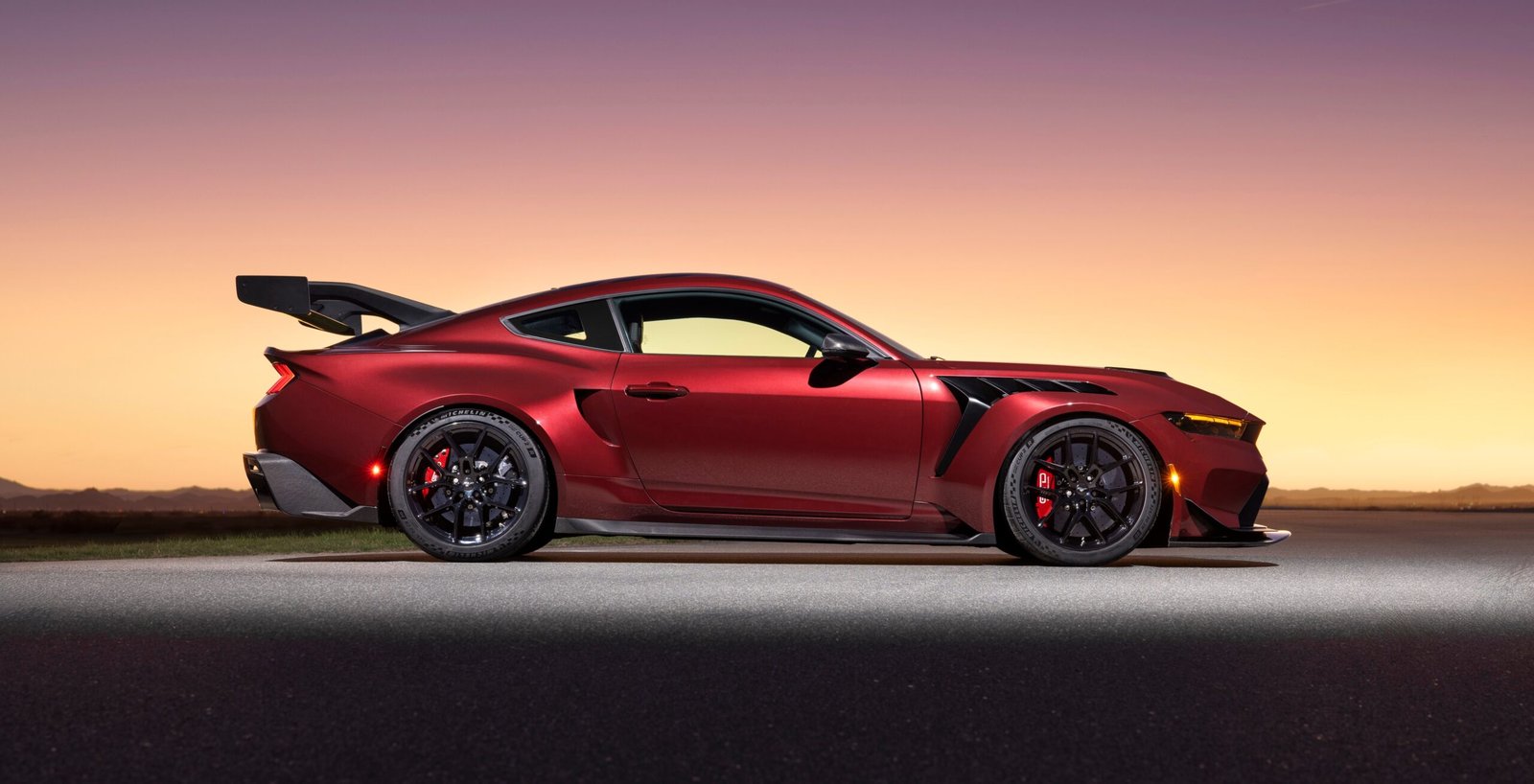
The 2028 Ford Mustang GTD 1901 brings Royal Red paint, an asymmetric black-and-red stripe and a Mahogany Red cabin to Ford’s supercharged flagship. Ford announced the heritage treatment on November 17, 2026, connecting its name to Henry Ford’s 1901 racing victory. The company quotes up to 815 horsepower for the GTD, but the 1901 announcement is principally about a new presentation and revised interior details.
That distinction makes the car more interesting than another power-number headline. The exterior ties exposed carbon to a dramatic color scheme; the cabin adds warmth to a machine associated with aero and lap times. Ford also describes equipment for the wider 2028 GTD range. Here is what the release establishes, why the details matter and which buying questions remain unanswered.
This is a research-based report and editorial analysis, not a road test. Photographs are supplied by Ford Motor Company and may show optional equipment. Display advertisements are separate from the editorial assessment.
| Item | What Ford states |
|---|---|
| Model year | 2028 Mustang GTD 1901 |
| Exterior | Royal Red; off-center black stripe with red centerline / diagonal accents |
| Cabin | Mahogany Red seats; Race Red stitching and seatbelt edging |
| Engine context | Supercharged 5.2-liter V8; up to 815 hp |
| Package | Performance Package standard; confirm final model-year contents |
| Open questions | Price, production total, order window and delivery date not specified |
Royal Red makes the aero visible
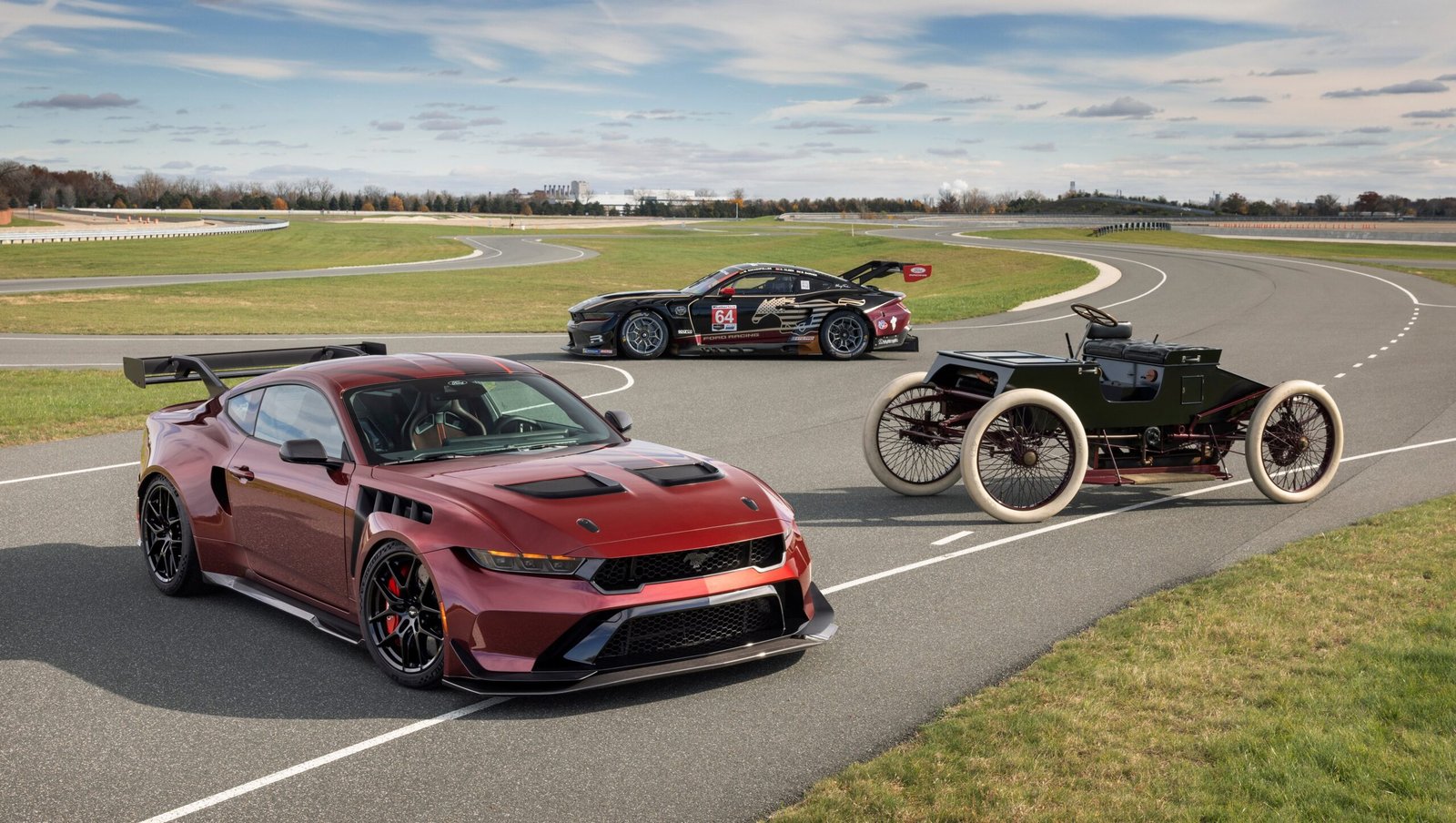
In Ford’s November 17 announcement, Mustang GTD brand manager Joe Bellino describes Royal Red as the starting point for the 1901 treatment. A broad off-center black stripe carries a bright-red centerline and diagonal details. Exposed carbon remains visible at the splitter, rocker panels, diffuser and rear wing.
The effect is more deliberate than applying a historic number to an otherwise unchanged paint option. The dark stripe and exposed carbon connect the upper body to the functional-looking edges of the car, while the red breaks that mass into separate visual elements. That is our interpretation of the supplied photographs, not a claim that the paint treatment changes aerodynamic performance.
Ford says the Performance Package is standard on the 1901. The final 2028 equipment sheet still matters, particularly when comparing wheel and trim options. An older package description should not silently become the complete contents list for a later model year.
Why the name reaches back to 1901
The reference predates Ford Motor Company itself. Ford’s historical account places Henry Ford’s victory over Alexander Winton at Grosse Pointe on October 10, 1901, in the car known as Sweepstakes. Ford Motor Company was founded in 1903. The racing result helped establish credibility for an engineer whose business ambitions were still taking shape.
Ford revisited that episode in its September 2026 Sweepstakes history feature. The useful connection is the role of competition in earning attention and support, not an attempt to equate the mechanical design of a 1901 racer with a modern GTD. More than a century separates their tires, structures, controls and performance context.
That makes 1901 a broader Ford racing reference rather than a revival of an old Mustang trim. It gives the livery a story that starts before the pony car existed. The supplied heritage photograph places the red GTD alongside historic-racer and modern-race-car imagery; those are different vehicles, and the GTD 1901 is not being introduced as a GT3 race entry.
A warmer cabin for a hard-edged flagship
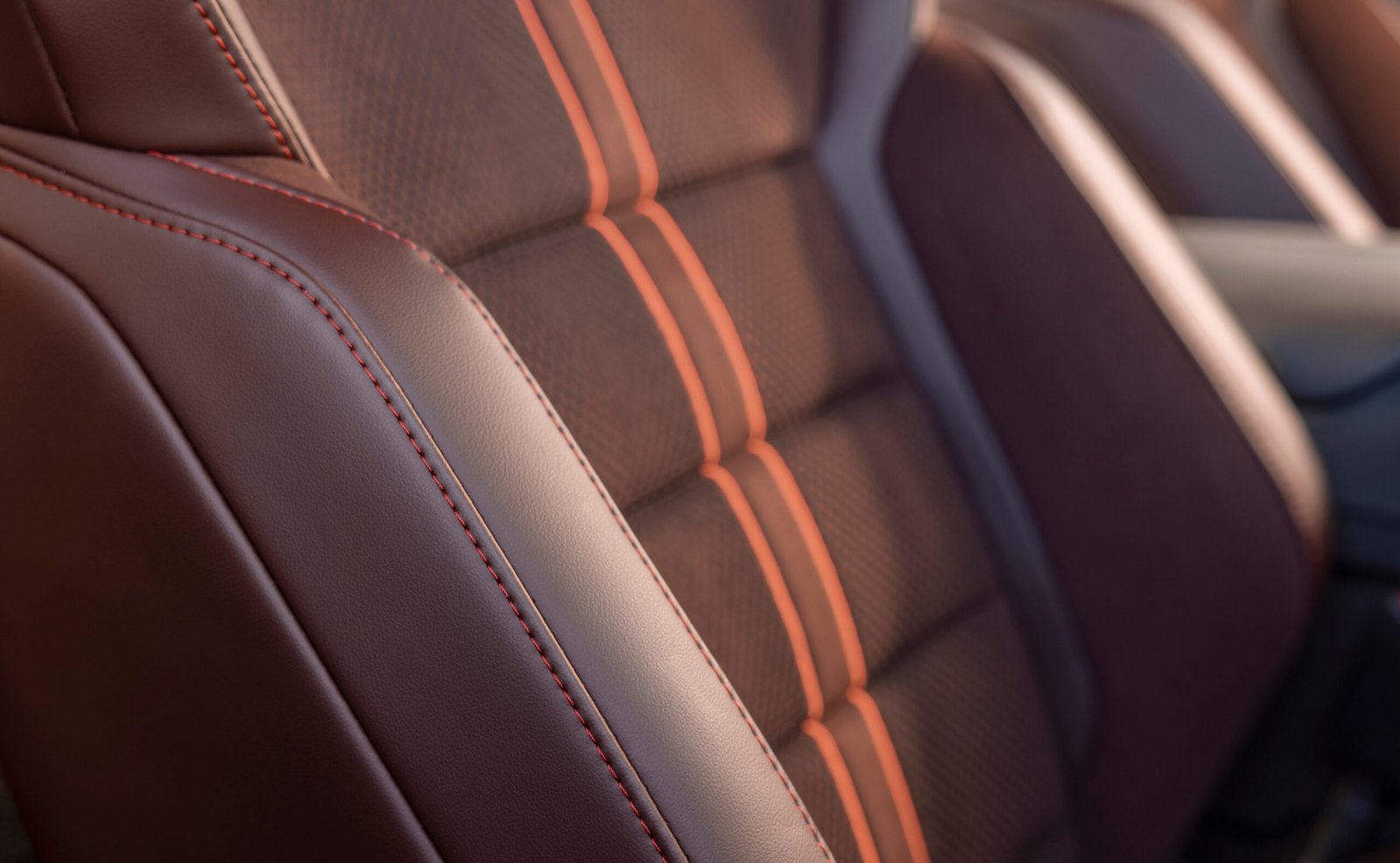
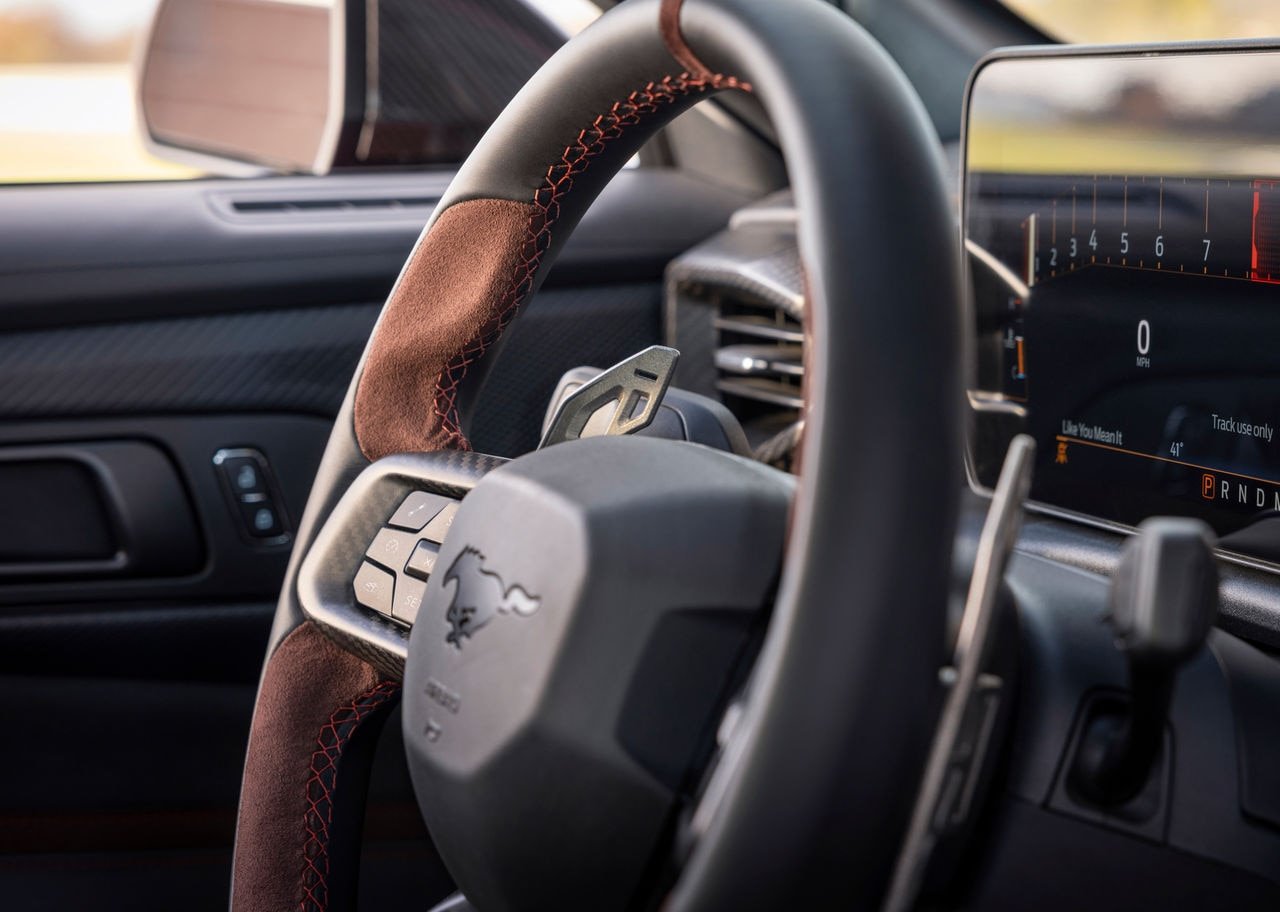
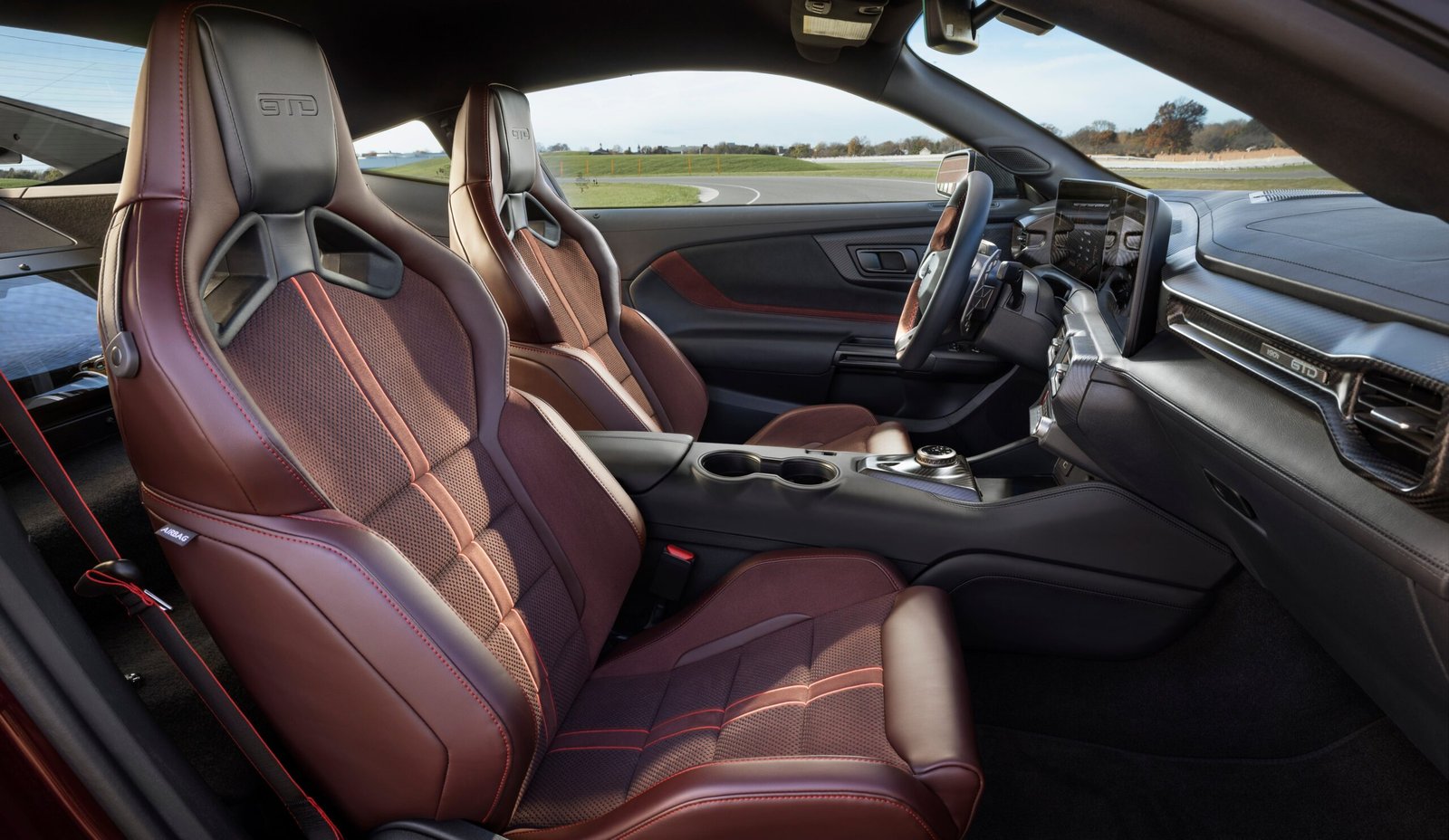
Inside, the distinctive change is Mahogany Red leather on the seats, paired with Race Red stitching and red-edged seatbelts. Ford also describes Mahogany Red suede on the inner portion of the steering wheel. The photographs show how those tones sit against the darker structure and trim rather than turning every surface the same color.
This is a meaningful contrast for a car whose identity is often reduced to carbon fiber and a large rear wing. A buyer spends time looking across the dashboard and touching the wheel, so material and color choices are part of ownership even when they do not alter the horsepower figure. The announcement provides design information; it does not establish our own judgment of comfort, wear or driving ergonomics.
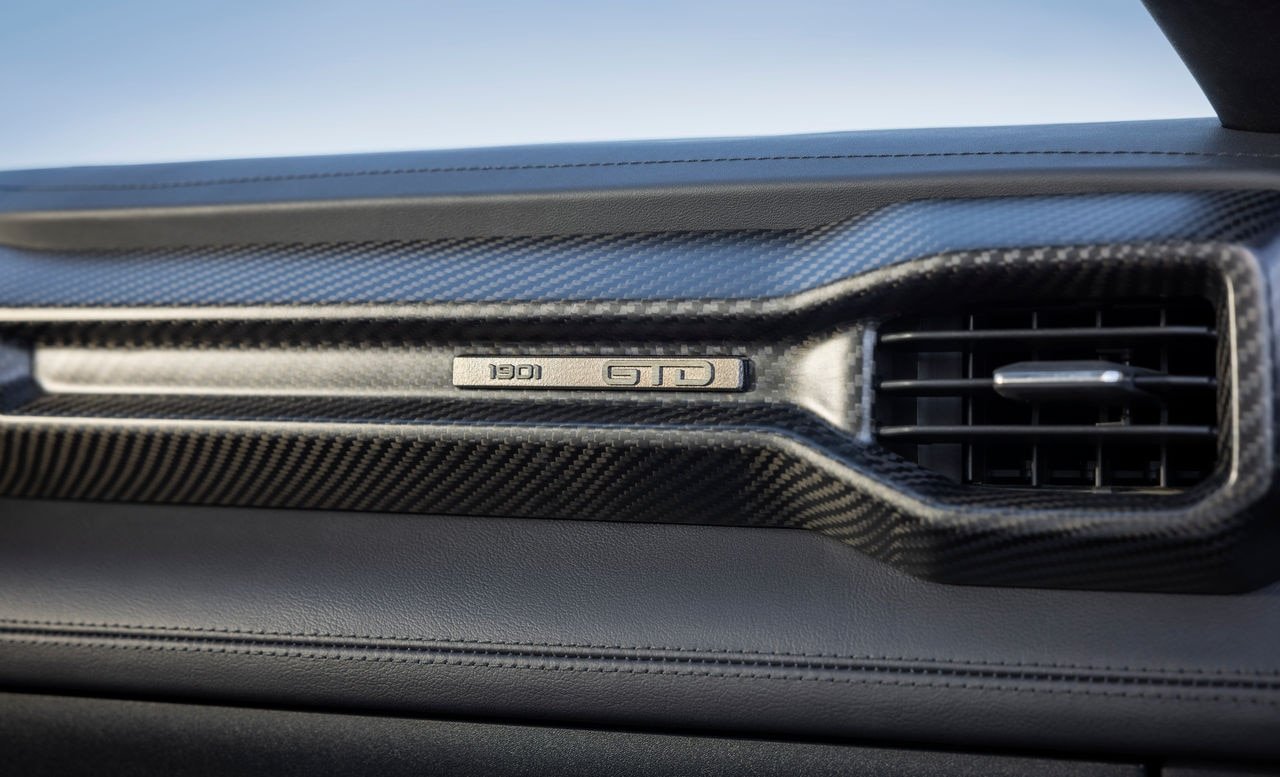
Some cabin news belongs to the broader model year. Ford says full-grain leather is standard on the instrument panel, inner doors and center-console lid across all 2028 GTD models. Distinguishing that range-wide update from the 1901’s Mahogany Red treatment makes comparisons with other GTDs more useful.
Wheels and titanium need their qualifiers
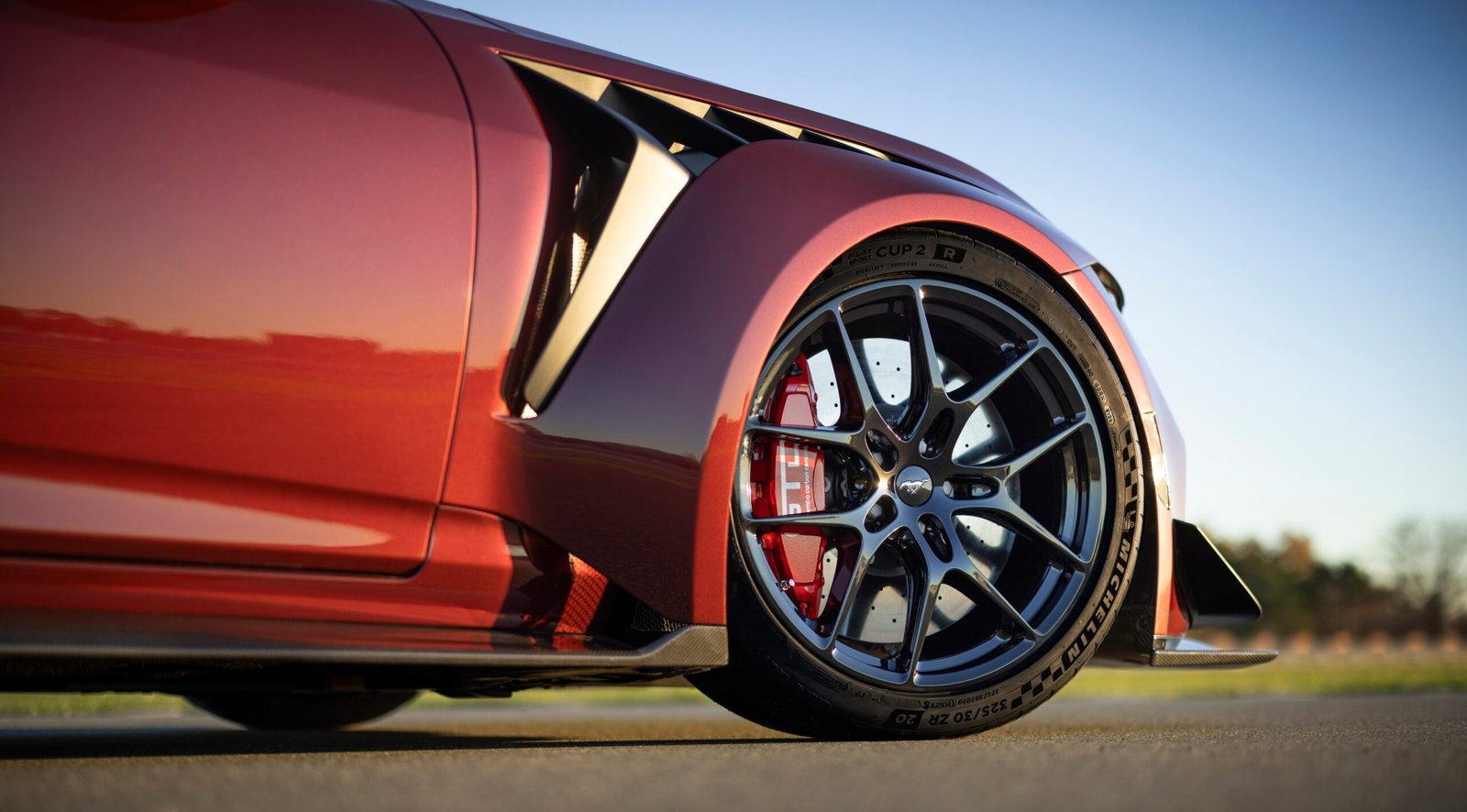
Ford lists available magnesium wheels and quotes a 50.3-pound reduction compared with the standard Magnetite aluminum wheels. That is Ford’s comparison figure, not our weighing result, and it should not be repeated as a per-wheel saving. The release’s use of “available” also deserves to survive in a buying summary rather than disappearing behind the statement that the Performance Package is standard.
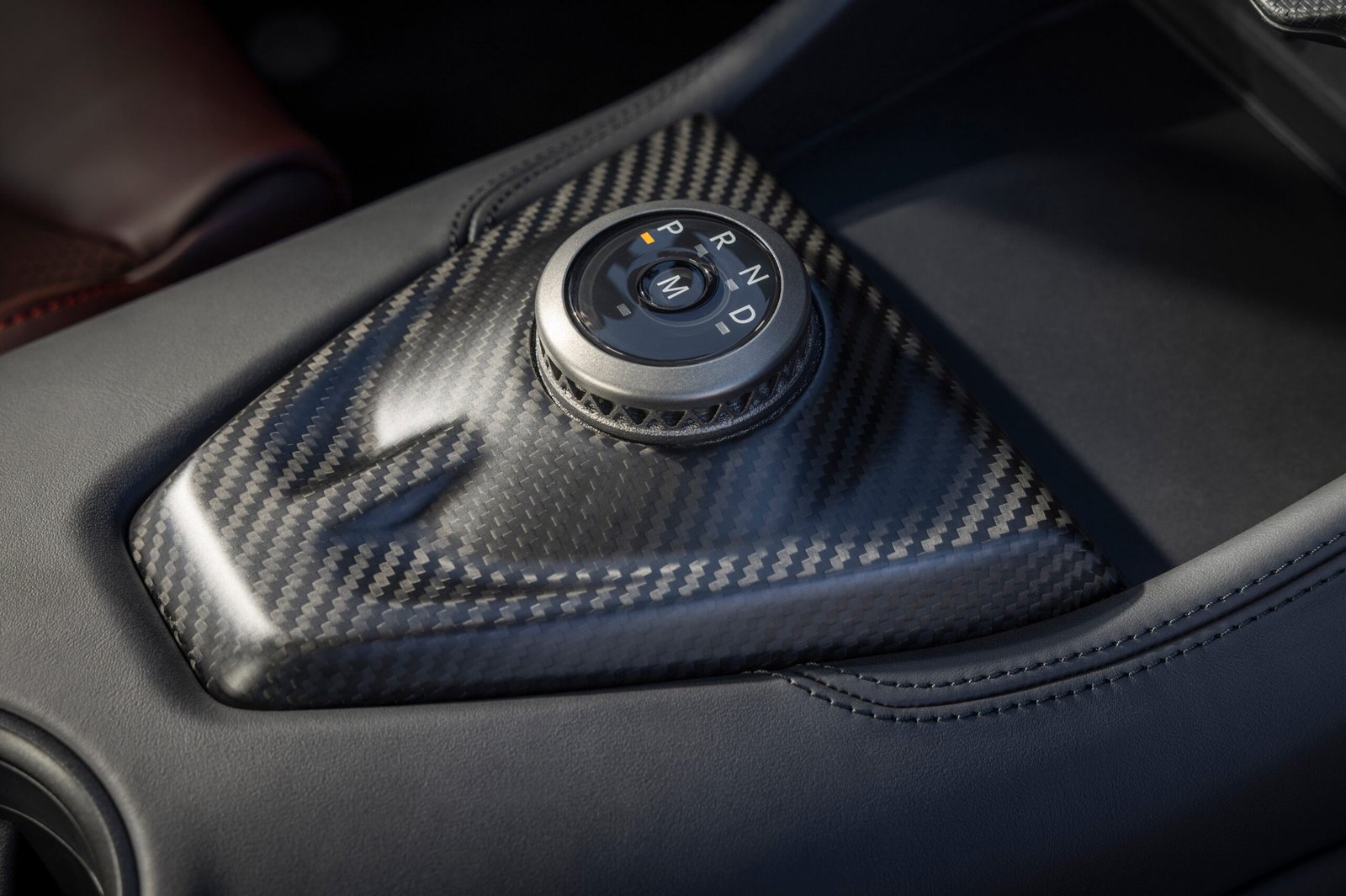
Optional titanium trim adds lengthened shift paddles, a redesigned selector and a passenger-side plaque carrying a partial VIN. Ford says the 3D-printed metal is reclaimed from retired F-22 aircraft parts, with design edges inspired by the GTD’s shock towers. The appeal is the combination of material provenance and a design reference drawn from the car itself.
These are equipment choices to verify on the actual order. The photographs make the selector and cabin details tangible, but a close-up of a wheel does not by itself identify its material. We have kept the gallery captions descriptive rather than assigning optional hardware from appearance alone.
The 815-hp context
The release describes a supercharged 5.2-liter V8 producing up to 815 horsepower, carbon-fiber bodywork and available active aerodynamics. Those figures place the 1901 within the GTD story; they do not identify a newly announced displacement or a 1901-only power increase.
Ford’s earlier 2026 GTD technical overview explains the wider car’s transmission and chassis context. Use that as background, while checking final 2028 specifications before building an order comparison. The mechanical brief and a particular model-year options list are related pieces of information, not interchangeable documents.
For readers following Ford’s performance ladder, our Dark Horse editorial assessment covers a different Mustang proposition. The GTD 1901 should also remain separate from GTD Competition coverage: this announcement supplies no 1901-specific Nürburgring lap time. A result from another GTD configuration cannot be reassigned to the red car because the names share three letters.
Watch the earlier GTD development film
Video: Ford Motor Company. Official Ford film published May 1, 2025, showing earlier GTD development and track context. It is archival footage, not a GTD 1901 reveal or a 1901-specific lap result.
GTD 1901 photo details
These seven additional Ford photographs show exterior angles, striping, steering-wheel and dashboard details, the seat, optional titanium selector and front wheel / carbon-body area. They differ from the header and main body images. Select a photograph to open the enlarged viewer. Photo credit: Ford Motor Company; optional equipment may be pictured.