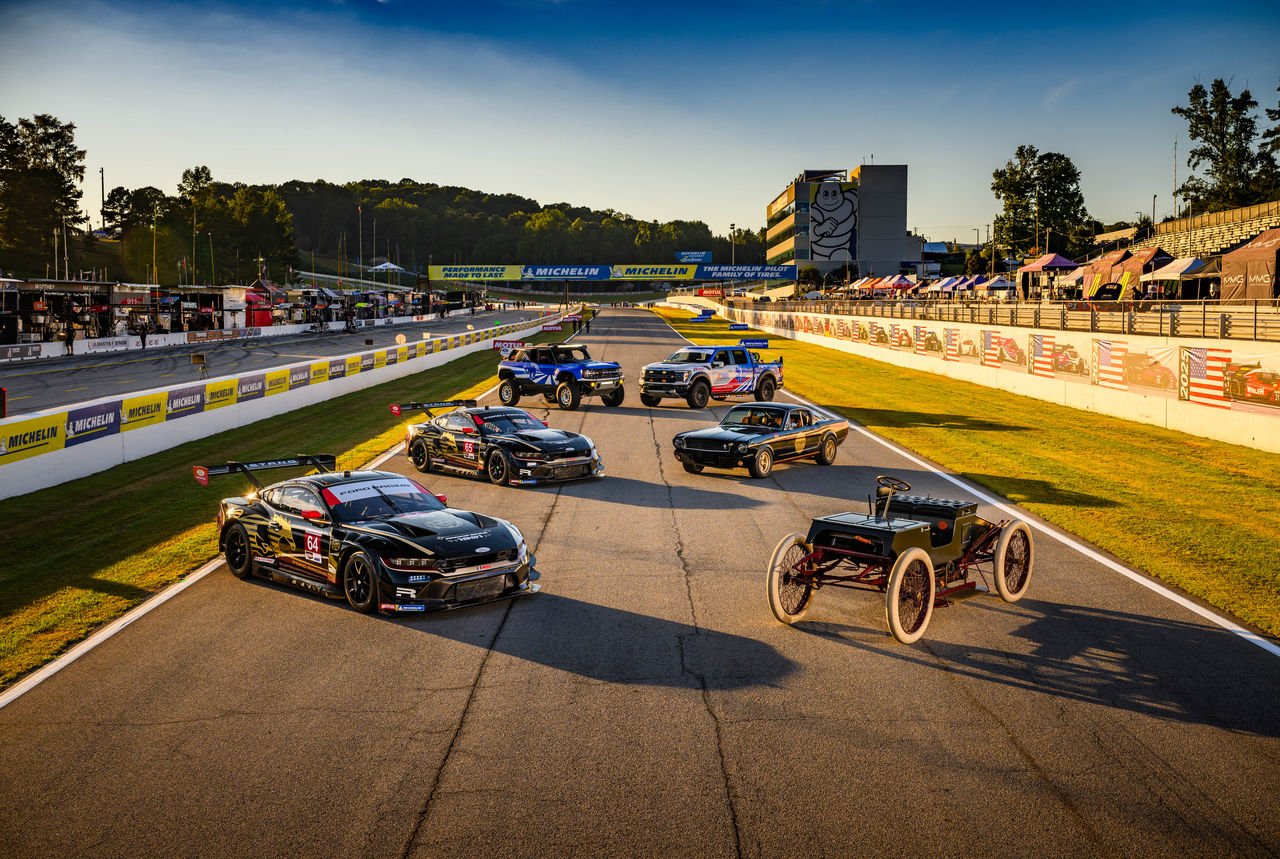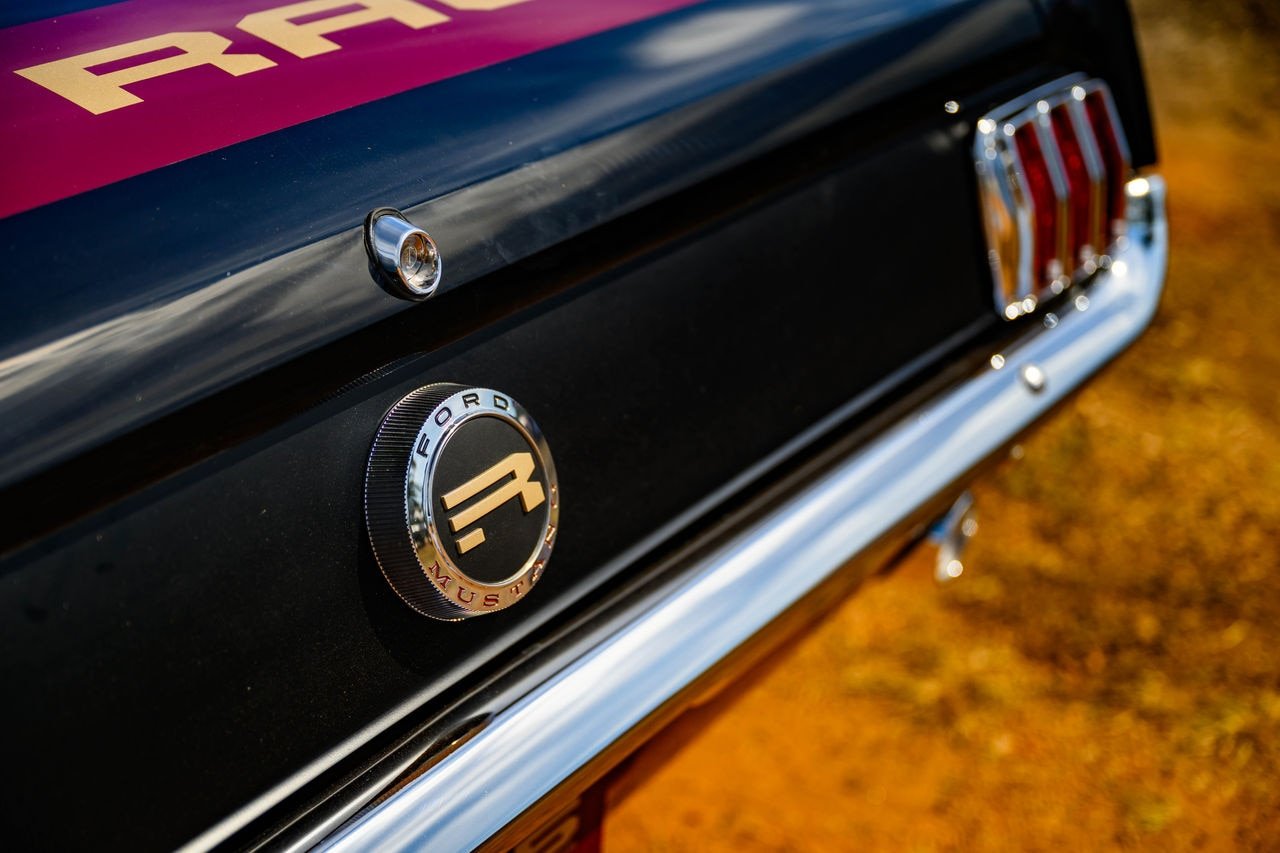
Ford Racing’s R125 is a 1966 Mustang Fastback restomod built for SEMA 2026. Ford paired a 347-cubic-inch crate V8 with a Tremec TKX five-speed and electronic fuel injection. It’s a useful look at how a modern crate-engine build can keep the character of a classic Mustang.
The R125 name marks 125 years of Ford Racing. Ford traces that history to Henry Ford’s 1901 race win over Alexander Winton in Sweepstakes. The 1966 Fastback gives the anniversary a recognizable link to the Mustang, and the parts underneath it give builders concrete ideas to compare with their own projects.
Ford Racing R125 specs
| Component | Ford’s SEMA build |
|---|---|
| Base car | 1966 Ford Mustang Fastback |
| Engine | 347-cubic-inch Ford Racing crate V8 with Boss block and aluminum heads |
| Output | 360 horsepower and 400 lb-ft of torque, per Ford |
| Fuel delivery | Edelbrock Pro-Flo electronic fuel injection |
| Gearbox | Tremec TKX-600 five-speed manual |
| Valve covers | Ford Racing two-piece design with interchangeable tops |
The racing story behind R125
The anniversary starts with a race rather than a production-car launch. The Henry Ford’s record of Sweepstakes identifies October 10, 1901, as the day Henry Ford defeated established racer Alexander Winton at Grosse Pointe, Michigan. The result gave the novice Ford a public demonstration of his engineering ability, years before the Mustang name existed.
That history makes the R125 a more interesting anniversary car than a badge-and-paint exercise. The original race connected an engineering idea with something spectators could watch. A show build connects a modern parts catalog with a finished car people can inspect. In both cases, the complete machine does the explaining. For a Mustang enthusiast, that is the useful link between the early racing story and a familiar Fastback shape.
Why a 347 makes sense here
The 347 is a Ford small-block approach to the build. It preserves the broad character of a conventional pushrod V8 under the hood. The Boss block and aluminum heads form the core of Ford’s engine package. The EFI system changes how the car meters fuel and gives the build a modern layer of control without making the engine bay look like a late-model swap.
Anyone planning a comparable build should price the powertrain as a system. Fuel delivery, wiring, exhaust, cooling and accessory drive all have to work together. The engine’s advertised rating only describes one part of that investment. Ask a builder to list the supporting components with the engine quote so you can compare two builds on the same basis.
Fuel injection is part of the whole system
Ford identifies the R125’s fuel system as Edelbrock Pro-Flo. Edelbrock’s current EFI range explains the appeal of sequential port injection: fuel is introduced at the intake ports through individual injectors. Its Pro-Flo 4 range is one example of that approach. Ford’s build announcement does not identify the exact Pro-Flo generation or kit number used in this car.
For someone planning a similar project, the useful lesson is to make the fuel system part of the initial design. An engine, tank arrangement, electrical system and controls need to be selected together. Leave room in the budget and in the engine bay for the supporting hardware. That planning is more useful than assuming the most visible component in a show-car photograph is the only part required to reproduce the result.
Read the design in the photographs
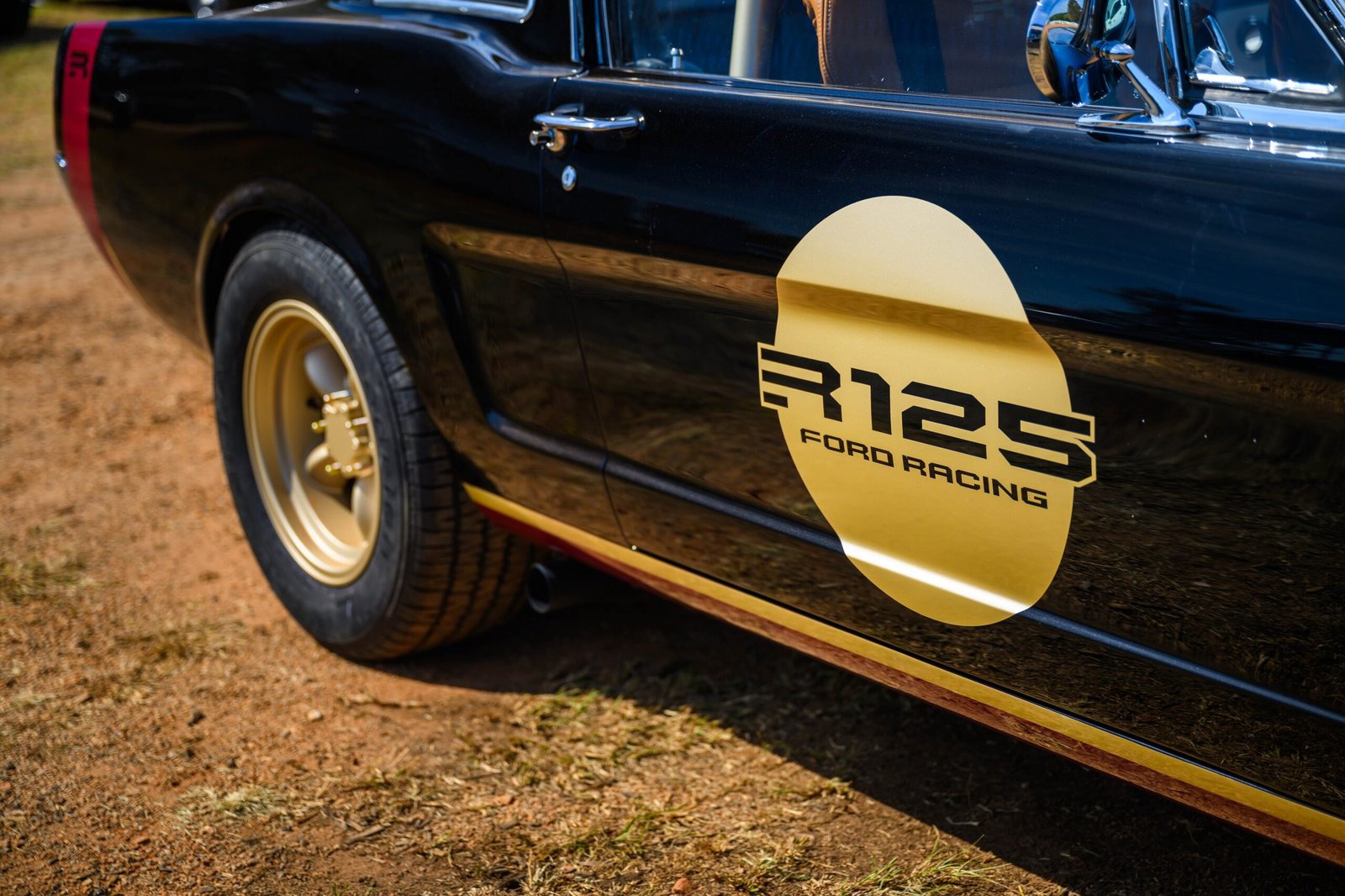
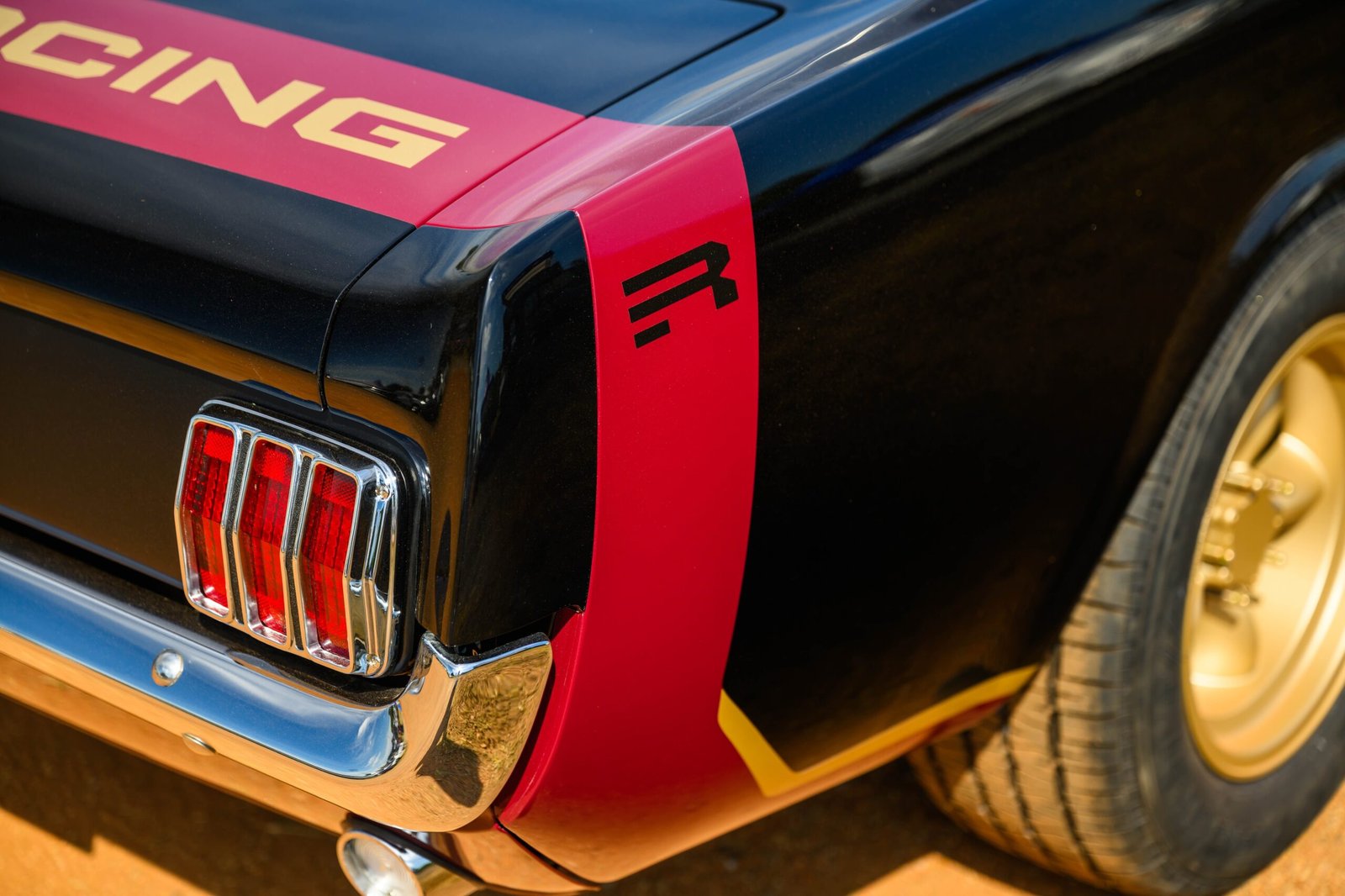
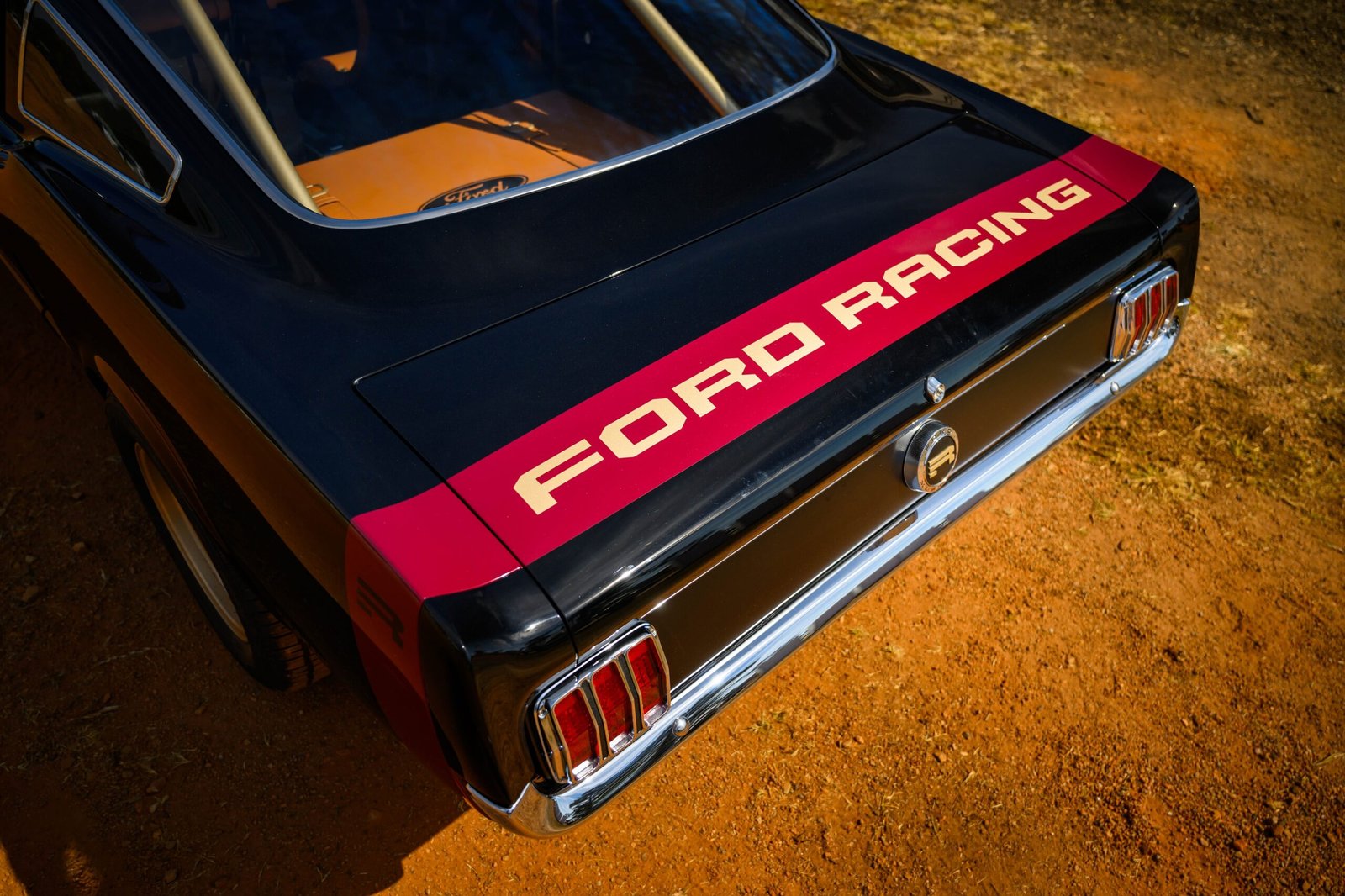
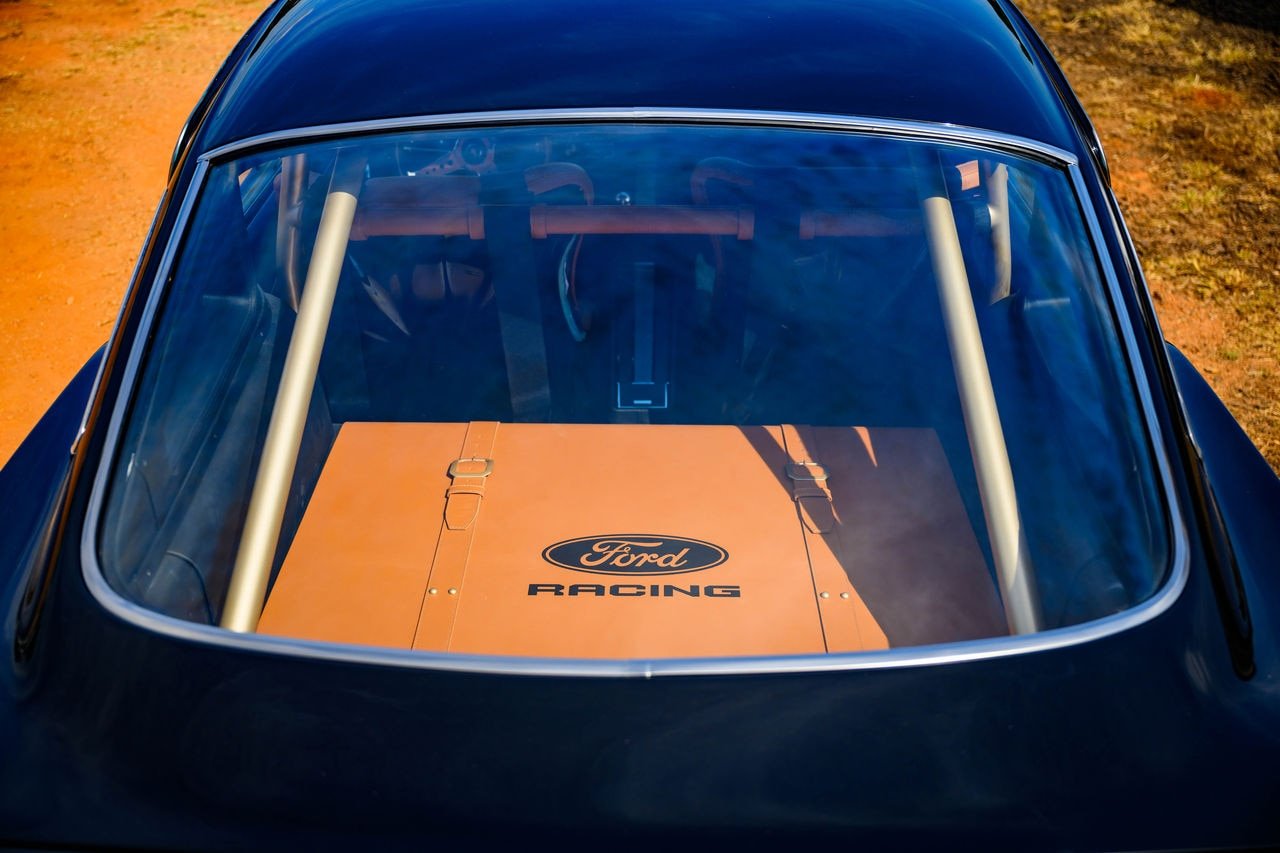
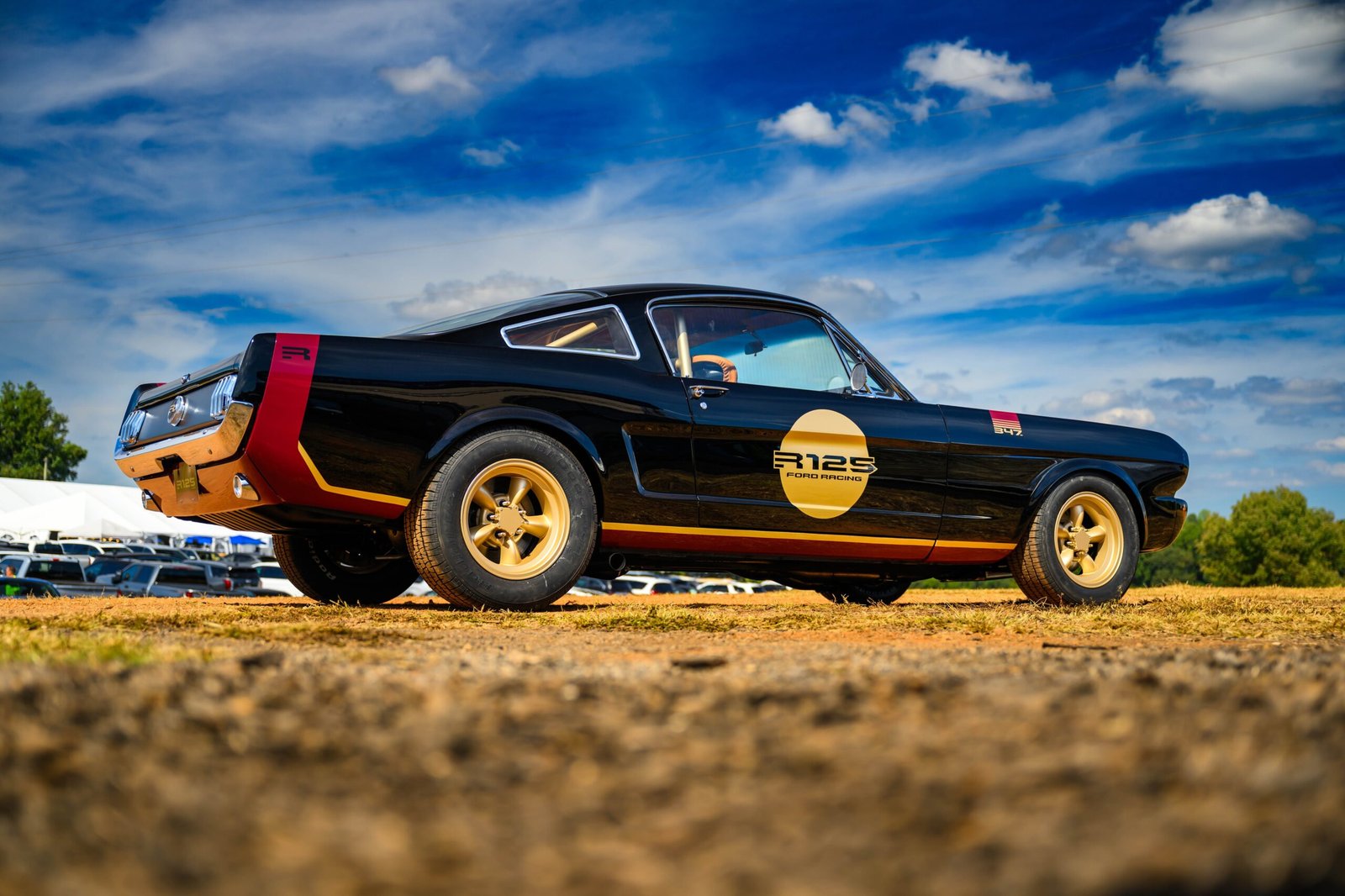
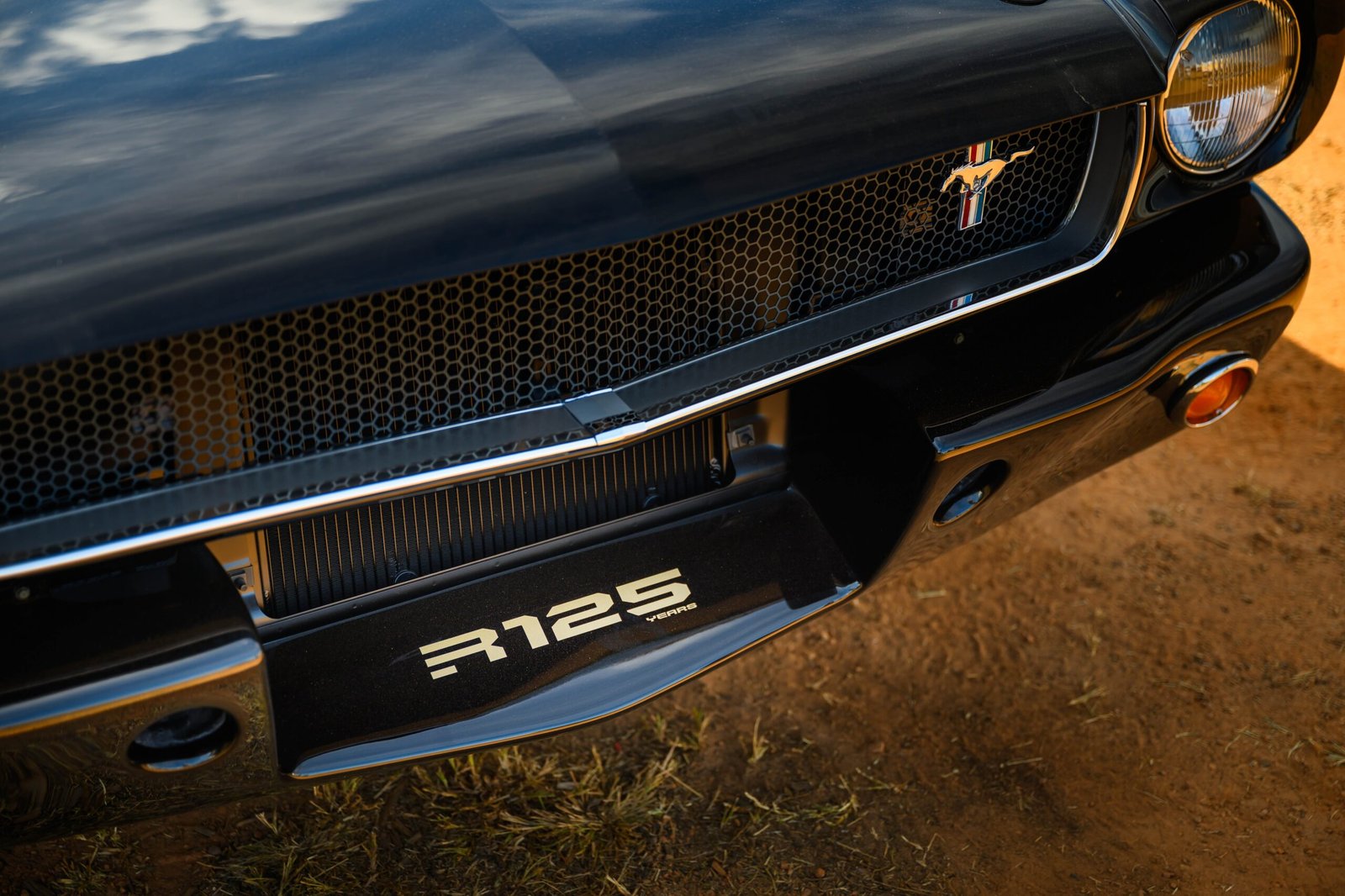
The black bodywork, gold wheels and large gold door roundel make the Fastback’s identity easy to read from a distance. Red accents add another layer around the lower body and rear quarters, while bright exterior trim keeps the familiar 1966 silhouette visible. The result gives the anniversary graphics room to work without disguising the underlying Mustang.
Study those details separately when thinking about your own project. A wheel finish, a stripe or a period-shaped mirror can change the presentation without requiring a copy of the entire car. The more useful design exercise is to pick a consistent direction, then decide which details support it. The R125 photographs are a reference for that process, rather than a shopping list with universal fitment.
What the TKX adds to a classic
The five-speed is as important to the brief as the V8. The TKX gives the driver an additional ratio and keeps a traditional manual layout. The practical effect of fifth gear depends on the transmission’s exact ratios, the final-drive ratio and the tire diameter. A builder who plans long highway trips should put those numbers next to each other before ordering a gearbox.
Shifter position and driveline fit deserve a look early in the project. Compare the gearbox with the car’s tunnel, mounting points, clutch arrangement and driveshaft before treating it as a bolt-in package. Record the installed shifter and its hardware so any replacement knob uses the correct thread and pattern.
Overdrive needs a matching final drive
TREMEC describes the TKX as an aftermarket five-speed with three available shifter positions and a compact aluminum housing. Its published family rating is 600 lb-ft of input torque. That transmission rating is different from the R125 engine’s output and should not be read as a horsepower claim for the car. TREMEC’s product page explains the gearbox family.
The TKX manual identifies fifth as an overdrive ratio. At a fixed road speed, that lets the engine turn more slowly than it would in a direct fourth gear, with the axle and tires unchanged. TREMEC offers different configurations; Ford’s R125 story does not state the selected fifth gear or rear-axle ratio. Those missing details are why a cruise-rpm estimate for a proposed build needs its own complete set of numbers.
Watch TREMEC explain the TKX
This official TREMEC overview shows the transmission family Ford selected for the R125. It is a component video from the TKX’s 2020 introduction; the Ford photo gallery below shows the actual R125 Fastback.
Video: TREMECtv. Product-family overview, originally published in 2020.
What carries over to your build
The R125 offers a clear decision tree for a street-focused Fastback. Decide what you want to keep about the original driving experience, then choose project priorities such as highway manners, underhood service access and the sound you want. Ford’s two-piece valve covers are a small example of the last phase of that process. The interchangeable tops let the builder change the look while retaining the cover’s functional layout.
Ford shows the Fastback as a SEMA showcase for individual Ford Racing parts. For a similar project, build a parts list around the specific car and have a restoration shop check the whole combination. Our Mustang restoration guide covers the work to assess before a project reaches the engine bay.
Plan the car around its intended use
A good restomod brief starts with an ordinary day behind the wheel. Decide whether the car will cross a state on the highway, travel to local meets or spend most of its time on shorter drives. That choice helps organize the work: engine and transmission first, supporting systems alongside them, then the cabin and finish details that make the car pleasant to use.
Write down what is known about the starting car before ordering major parts. Body condition, the installed driveline and previous modifications can change the scope of a project. A complete estimate should explain how the powertrain, braking, suspension, cooling and electrical work fit together. Comparing only an engine’s advertised price leaves much of the project out of view.
Our take on the R125 is that its appeal comes from restraint and consistency. It keeps the Fastback recognizable while using a manual gearbox and a small-block package to give the build a clear theme. A personal project can take a different direction. The transferable idea is to choose components as a system and make the finished car reflect the way its owner intends to drive.
R125 Mustang photo gallery
Photos by Ford Motor Company. Select an image to view it larger.