

The 2027 Ford Hypercar will be revealed on Thursday, November 26, 2026. Ford Racing is preparing a two-car factory effort for the FIA World Endurance Championship, with a naturally aspirated 5.4-liter Coyote V8 and an ORECA-developed chassis. The destination is the top category at the 24 Hours of Le Mans in June 2027, where Ford intends to compete for overall victory.
There is already a substantial story behind the covered car. The engine has run in its chassis, the prototype has completed extended circuit testing, and Ford has assembled six race drivers plus a newly announced reserve. The reveal arrives midway through the work of turning those ingredients into a reliable endurance-racing operation. Here is how the pieces fit together, why Mustang enthusiasts should care, and which details deserve attention when Ford pulls the cover off.
Ford’s October announcement establishes the reveal date. Check that official page for presentation details as the event approaches. Ford’s reveal announcement
2027 Ford Hypercar essentials
| Program detail | Confirmed information |
|---|---|
| Full reveal | November 26, 2026 |
| Championship | FIA World Endurance Championship, Hypercar class |
| Factory entries | Two Ford Racing cars |
| Chassis partner | ORECA |
| Combustion engine | Ford-developed naturally aspirated 5.4-liter Coyote V8 |
| Le Mans event | June 9–13, 2027, on the published WEC calendar |
The ambition behind the GT40 reunion
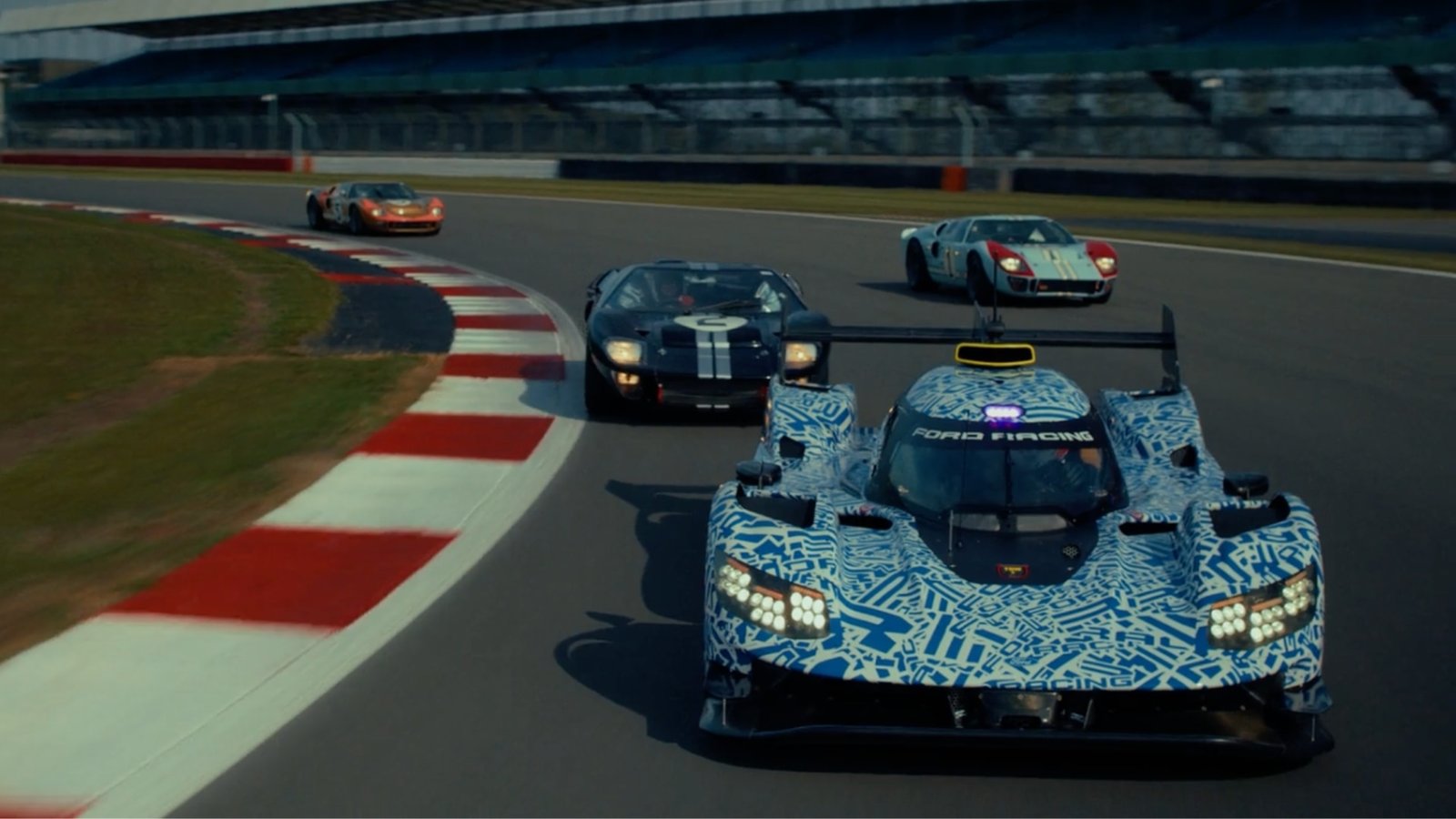
Ford chose a particularly evocative way to announce the reveal. Its teaser puts the development prototype on track with the three GT40s associated with the famous 1966 Le Mans finish. Watching the cars together makes the scale of the new program immediately understandable. A modern factory prototype carries the same expectation that made the original campaign so memorable. Ford’s official teaser story
The history also explains the language of a return. Ford achieved four consecutive overall Le Mans victories from 1966 through 1969. Its Ford GT won the GTE Pro class in 2016, and the Mustang GT3 subsequently carried the brand into contemporary GT racing. The Hypercar project adds another level of competition to that endurance portfolio. Ford announced ORECA and program leader Dan Sayers in June 2025, giving the effort an organizational foundation well ahead of its debut. Ford’s program and heritage announcement
For a Mustang audience, the appeal extends beyond nostalgia. Following a season-long prototype program gives fans a way to watch Ford’s engine development, driver recruitment and race execution evolve together. The interesting question is how effectively that organization converts its preparation into repeatable race performances.
A Coyote V8 built for endurance
The engine provides the most familiar connection to Ford’s road-going performance cars. Ford has confirmed a 5.4-liter, naturally aspirated Coyote V8 designed, developed and built in-house in Michigan. In July, the company reported its first fire-up installed in the ORECA chassis with the hybrid system. That was an important step from testing individual parts to operating the assembled race car. Ford’s engine integration report
Our assessment is that integration deserves as much attention as the engine’s displacement. Endurance racing asks the powertrain, cooling, electronics and chassis to keep working together through changing loads and repeated stints. Ford identified reliability, hybrid-system integration and aerodynamic validation among its development priorities. Those priorities help explain why an appealing engine sound is only the beginning of evaluating the program. Ford’s stated testing objectives
Before the first full circuit test, Ford recreated a lap of the 13.626-kilometer Circuit de la Sarthe on a Dearborn dynamometer. Modeling the circuit’s acceleration, braking and gear changes lets engineers expose the engine to a representative sequence of demands while collecting controlled data. FIA WEC also described parallel driver-simulator work in North Carolina. FIA WEC’s look inside the development process
ORECA and Ford’s prototype approach
ORECA supplies the chassis foundation under the program announced by Ford. The manufacturer’s original release explains that the applicable rules require a chassis from one of four approved suppliers. Ford selected a specialist with extensive endurance-racing experience and appointed Sayers to lead the effort, drawing on his background in GT racing, engineering and powertrain programs. Ford’s chassis and leadership announcement
That division of responsibilities makes the development story easier to follow. Chassis expertise, Ford’s engine work and the race team’s operating procedures all have to converge. As readers watch the reveal, the practical questions concern how the complete package is progressing, how the drivers describe its behavior and what testing comes next. Bodywork photographs are one part of that picture.
Testing has moved beyond the shakedown
The first comprehensive test covered more than 1,000 kilometers at Paul Ricard after a shakedown and three days of running. Logan Sargeant, Matt Campbell, Tom Blomqvist and Mike Rockenfeller drove, while Sebastian Priaulx and Nick Yelloly attended to gather feedback. FIA WEC’s August report described this as the start of an intensive development schedule. FIA WEC’s Paul Ricard test report
A November 16 update brings the timeline closer to the reveal. Ford had completed five of six planned European tests, with MotorLand Aragón still ahead before the program moved to the United States. The same announcement added Tom Dillmann as reserve driver for 2027. His experience spans LMP2, LMP1 and Hypercar machinery, and he won his Le Mans class in both 2025 and 2026. FIA WEC’s latest Ford program update
Our reading of those milestones is that Ford is building operating depth alongside the car. A reserve driver adds continuity when the team needs testing input or cover for a race driver. Repeated outings also give engineers opportunities to compare changes against earlier runs. For fans assessing progress, completed running and the quality of the feedback are more informative than assigning a competitive ranking to teaser footage.
The drivers shaping the new car
Ford’s six race drivers are Matt Campbell, Tom Blomqvist, Nick Yelloly, Logan Sargeant, Mike Rockenfeller and Sebastian Priaulx. Campbell brings IMSA title-winning experience and a WEC Hypercar victory. Blomqvist’s record includes two overall Rolex 24 At Daytona wins. Yelloly adds endurance victories and extensive Formula 1 simulator and development work. Ford’s June announcement left the final car pairings for a later date. FIA WEC’s factory-driver announcement
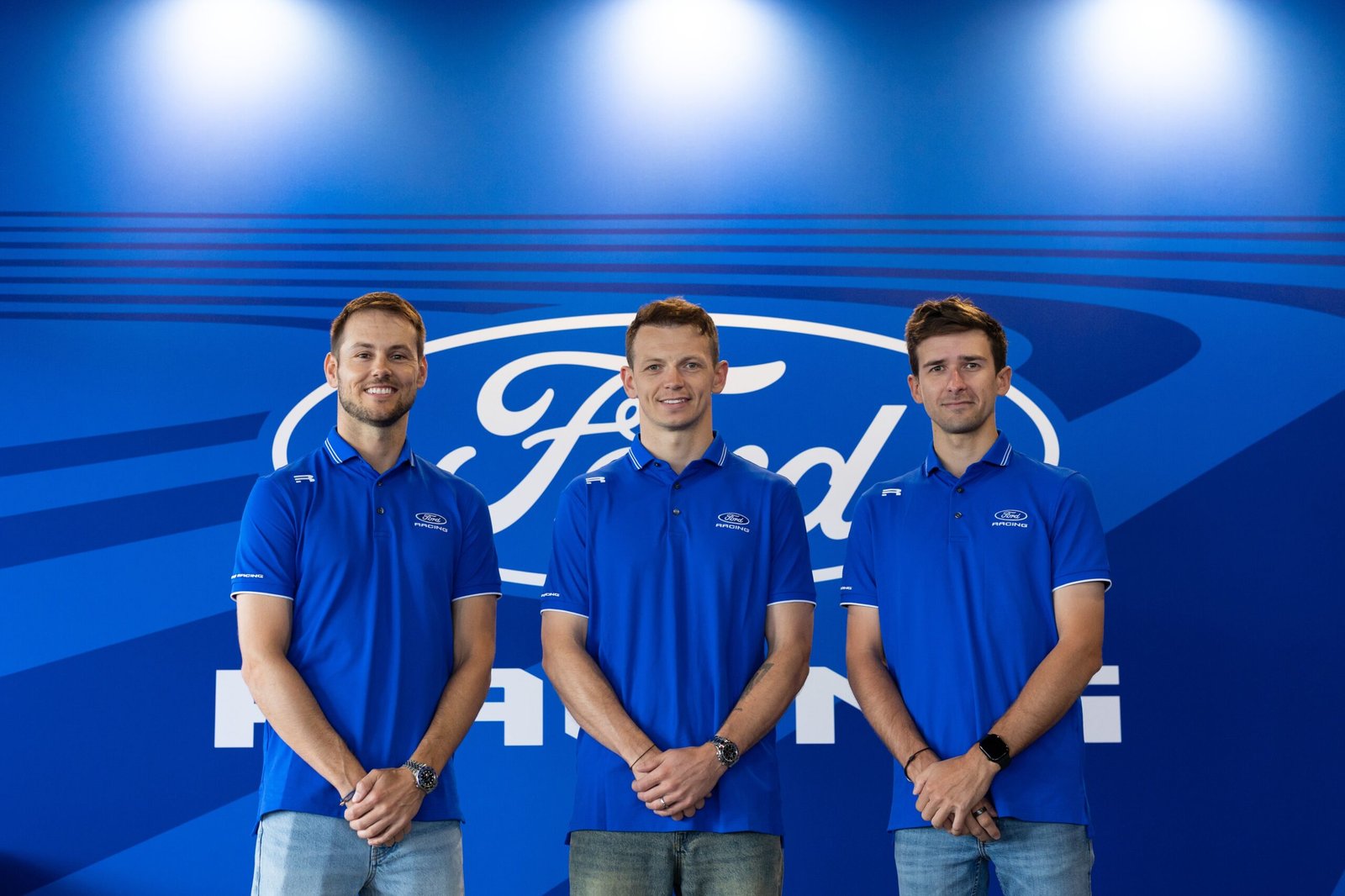
The roster matters during development as well as on race day. Drivers need a shared understanding of what the car does and which changes improve it. Several perspectives can expose a setup that suits one person but becomes difficult for a teammate. For an endurance program, building a car that a whole crew can use consistently is a worthwhile objective to track through the testing reports.
Watch Ford’s Hypercar teaser
Video: Ford Motor Company. Ford’s development car and three historic GT40s on track.
The historic cars give the video its emotional pull. The prototype supplies a first impression of the project’s shape and sound. As the program develops, look for technical explanations and sustained testing updates to put those impressions into context.
The 2027 road to Le Mans
The published WEC calendar gives Ford several race weekends before the championship reaches Le Mans. Qatar opens the campaign, followed by Imola, the returning Silverstone round and Spa-Francorchamps. That sequence gives a new program different circuits and operating conditions to work through before its highest-profile endurance test. FIA WEC’s approved 2027 calendar
| Milestone | Published 2027 dates |
|---|---|
| Official Prologue, Qatar | March 21–22 |
| Qatar 1812km event | March 25–27 |
| 24 Hours of Le Mans event | June 9–13 |
| Lone Star Le Mans, Austin | September 10–12 |
| Bahrain finale event | November 4–6 |
These are event windows from the championship schedule. U.S. fans have a home round at Circuit of the Americas in Austin. Check the relevant event page for session times, entries and ticket arrangements when planning a visit. Official calendar and event links
What to watch at the November reveal
Three areas deserve close attention. First is the car’s final identity and presentation. Second is the technical explanation of the complete package, especially the relationship between the V8, hybrid system and chassis. Third is the operational picture, including any confirmed driver pairings and the next test milestones. Those details would let readers connect the reveal to the work Ford has already described.
Our editorial view is that the strongest reason to follow this project is the chance to watch a major factory build an endurance contender from the start. The GT40 reunion establishes the ambition. The engine, test mileage and driver organization give the story substance. November 26 should provide another reference point for following that progression into the 2027 season.
For more of Ford’s current performance program, read our 2027 NASCAR Mustang reveal and Mustang Cobra reporting.
Ford Hypercar questions
When is the 2027 Ford Hypercar reveal?
Ford announced Thursday, November 26, 2026. Its official reveal announcement is the source to check for presentation updates.
What engine will the Ford Hypercar use?
A naturally aspirated 5.4-liter Coyote V8 developed in-house by Ford. Ford has also reported the engine running in its chassis with the hybrid system installed.
Who will drive Ford’s two Hypercars?
The six announced race drivers are Matt Campbell, Tom Blomqvist, Nick Yelloly, Logan Sargeant, Mike Rockenfeller and Sebastian Priaulx. Tom Dillmann is the reserve driver. Final car pairings were deferred in the race-driver announcement.
When is the Le Mans event?
Le Mans is round five of the published nine-round 2027 WEC calendar. Its event runs June 9–13, following rounds at Qatar, Imola, Silverstone and Spa.
Reporting checked November 18, 2026. Program facts above are attributed to Ford Racing and FIA WEC. Our assessments interpret those announcements and development milestones.

