Choosing a 2026 Mustang EcoBoost or GT is easier when you separate the engine decision from the equipment decision. A fully optioned car and a simpler one can answer very different needs, even when the badges sound familiar. Start with how you want to drive, then compare the exact builds you can buy.
Quick answer: Choose the 2026 Mustang GT if the 5.0-liter V8 or a six-speed manual is central to the experience you want. Consider the 2.3-liter EcoBoost if you want the Mustang shape and a 10-speed automatic without making the V8 your starting requirement. Compare total ownership costs using actual quotes rather than assuming the badge tells the whole story.
| Specification | EcoBoost | GT |
|---|---|---|
| Engine | Turbocharged 2.3L four-cylinder | Naturally aspirated 5.0L V8 |
| Ford-rated horsepower | 315 hp | 480 hp; 486 hp with optional active exhaust |
| Ford-rated torque | 350 lb-ft | 415 lb-ft; 418 lb-ft with optional active exhaust |
| Transmission | 10-speed automatic | Standard six-speed manual; available 10-speed automatic |
| Body choices | Fastback or convertible | Fastback or convertible |
| First decision | Are you happy choosing an automatic? | Do you specifically want the V8 and/or manual? |
Horsepower and torque are Ford ratings based on premium fuel under SAE J1349 conditions; they are not wheel-horsepower measurements from an Ultimate Stangs dyno test. Check the 2026 technical specifications and the EcoBoost and GT model pages for equipment qualifiers.
Turbo four-cylinder or V8: what the numbers tell you
The EcoBoost and GT approach the same Mustang idea from different directions. One makes a turbocharged four-cylinder the starting point; the other puts a naturally aspirated V8 at the center. Ford’s published ratings help define that difference, but a peak horsepower number does not tell you how comfortably you will use the car on your own commute.
Read horsepower and torque together, including the stated fuel and exhaust configuration. Then ask what you want from the car: the V8 identity, a clutch pedal, an automatic coupe for regular driving, or an open-top weekend car. These are useful reasons to choose. Calling one engine the only legitimate Mustang is not a substitute for deciding what you will enjoy.
Start with the transmission question
If your answer is “I want a clutch pedal,” the comparison narrows quickly. The 2026 EcoBoost does not offer a manual. That makes the GT the relevant choice between these two models, rather than treating transmission as a detail you can resolve after choosing the engine. If you prefer an automatic, you can compare both and focus on the rest of the car.
For a test drive, use a route that resembles your week. Try your normal parking situation, check the seating position, and spend time with the controls before deciding. A short demonstration focused only on acceleration answers a small part of an ownership question. We have not driven these two 2026 cars back to back; this guide uses Ford’s specifications and a practical comparison checklist.
The GT exhaust number needs its qualifier
The 486-hp GT figure applies to the optional active exhaust configuration. Ford’s base GT rating is 480 hp. That distinction is worth putting directly into a comparison sheet so an advertised peak figure does not quietly become the specification of every car on a lot. Decide whether the exhaust option is part of the experience you want, then verify it on the actual vehicle.
Compare Equipment, Trims and Packages
Write down the body style, equipment group, seats, wheel-and-tire setup, transmission, and any appearance or performance packages for each candidate. EcoBoost versus GT is an engine-family question; Premium and package names add a second layer. Two similarly priced examples can spend the money in different places. A feature you use every day may matter more than a specification you rarely call on.
Make a one-page comparison
Non-negotiables
Body style, transmission, seat fit and your preferred engine.
Actual builds
Record every package and the installed tire specification.
Real costs
Request insurance, out-the-door and consumable quotes for each VIN.
Base, Premium and body style: compare like with like
The GT and GT Premium share an engine family; Premium is an equipment choice rather than another name for the V8. The EcoBoost range also has its own equipment groups. Ford lists a 12.4-inch digital cluster and a 13.2-inch center display on the current models, while seating materials, convenience features and available packages depend on the specific trim. EcoBoost equipment and GT equipment are the starting references.
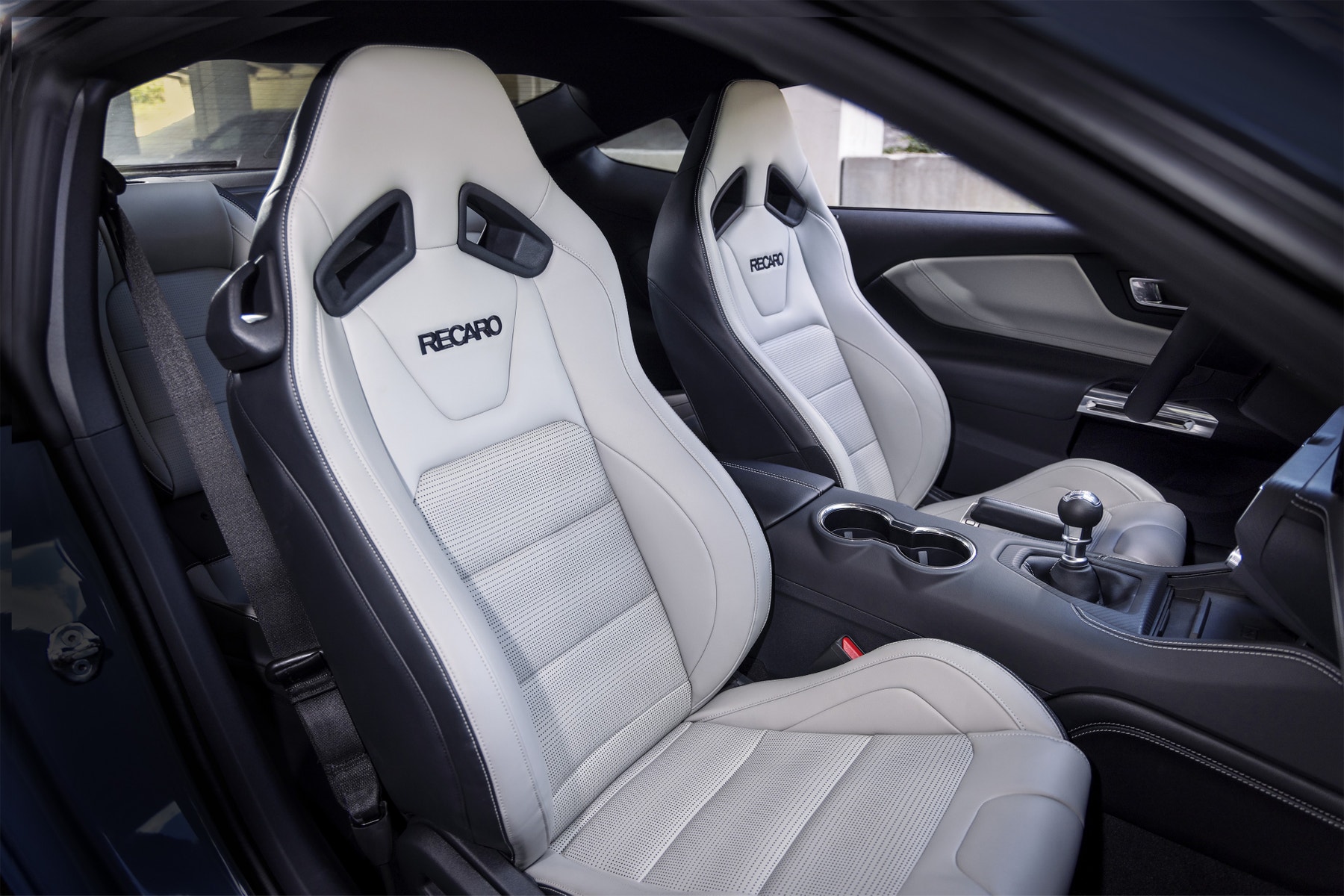
A higher equipment level can make sense if its features are the ones you will use every day. Check the actual seat adjustment, upholstery, audio system, mirrors and driver-assistance options rather than assuming a familiar trim name includes everything from an older model year. The right question is what this vehicle has, not what a similar car had in a video.
Body style is another separate choice. Ford’s U.S. order guide lists the base GT as a fastback; a V8 convertible is a GT Premium configuration. EcoBoost availability also depends on the equipment group. If you want a convertible, compare convertible builds throughout your quote sheet so a lower fastback starting price does not distort the decision.

Bring what you actually carry when you inspect the car: a work bag, groceries, sports equipment or a child seat if relevant. Test access and space in the vehicle rather than treating a body-style label as proof it fits your routine. Convertible buyers should also consider where the car will live and bookmark our Mustang convertible top-care guide.
What about fuel, insurance, and winter driving?
Use the specific vehicle’s current fuel-economy label, your own annual mileage, and your local fuel prices for a useful fuel-cost estimate. Obtain insurance quotes for the real VINs. This guide does not invent a universal monthly savings figure: purchase terms, mileage, location, and the driver’s policy can change the result.
The same discipline applies to tires. An engine badge is not a winter-readiness label. Check what is fitted, its manufacturer’s operating restrictions, and your local conditions. If you plan to park the Mustang seasonally, use our winter storage checklist. If you will drive it, begin with the correct cold tire-pressure information and a tire setup suitable for the conditions.
A fuel-cost comparison you can adapt
Use annual miles ÷ expected miles per gallon × price per gallon for each candidate. For example, 10,000 miles at an assumed 25 mpg and $4.50 per gallon is $1,800; the same mileage at an assumed 18 mpg is $2,500. The $700 difference is a worksheet example, not an EPA rating or a prediction for these two Mustangs. Replace every assumption with the actual vehicle label and your own use.
| Cost | What to compare |
|---|---|
| Purchase | Same body style, comparable equipment and itemized out-the-door quotes |
| Fuel | Your mileage, the exact car’s fuel-economy label and the fuel you plan to use |
| Insurance | Quotes for both VINs with the same coverage and deductibles |
| Tires and brakes | The installed sizes and replacement options for each build |
| Seasonal use | Suitable tires or a realistic storage plan, as appropriate |
Keep the comparison honest about time as well as money. A car that needs a seasonal tire change, a different parking arrangement or extra preparation before winter may still be the one you want. Knowing those requirements before buying gives you a better chance of enjoying the purchase after the initial excitement.
Where FX and Dark Horse fit
The FX Package is a styling choice restricted to an eligible GT Premium; our FX explainer separates it from the Performance Package. The regular Dark Horse is another model with its own hardware and specification, covered in our 2026 Dark Horse review. Neither name should replace a careful equipment comparison.
Watch: Ford’s 2026 Mustang exterior design film
This short, silent Ford film shows Mustang exterior styling and details on a GT Premium example. It illustrates the design rather than comparing acceleration or proving that every pictured feature is standard on EcoBoost or GT.
2026 Mustang EcoBoost and GT photo gallery
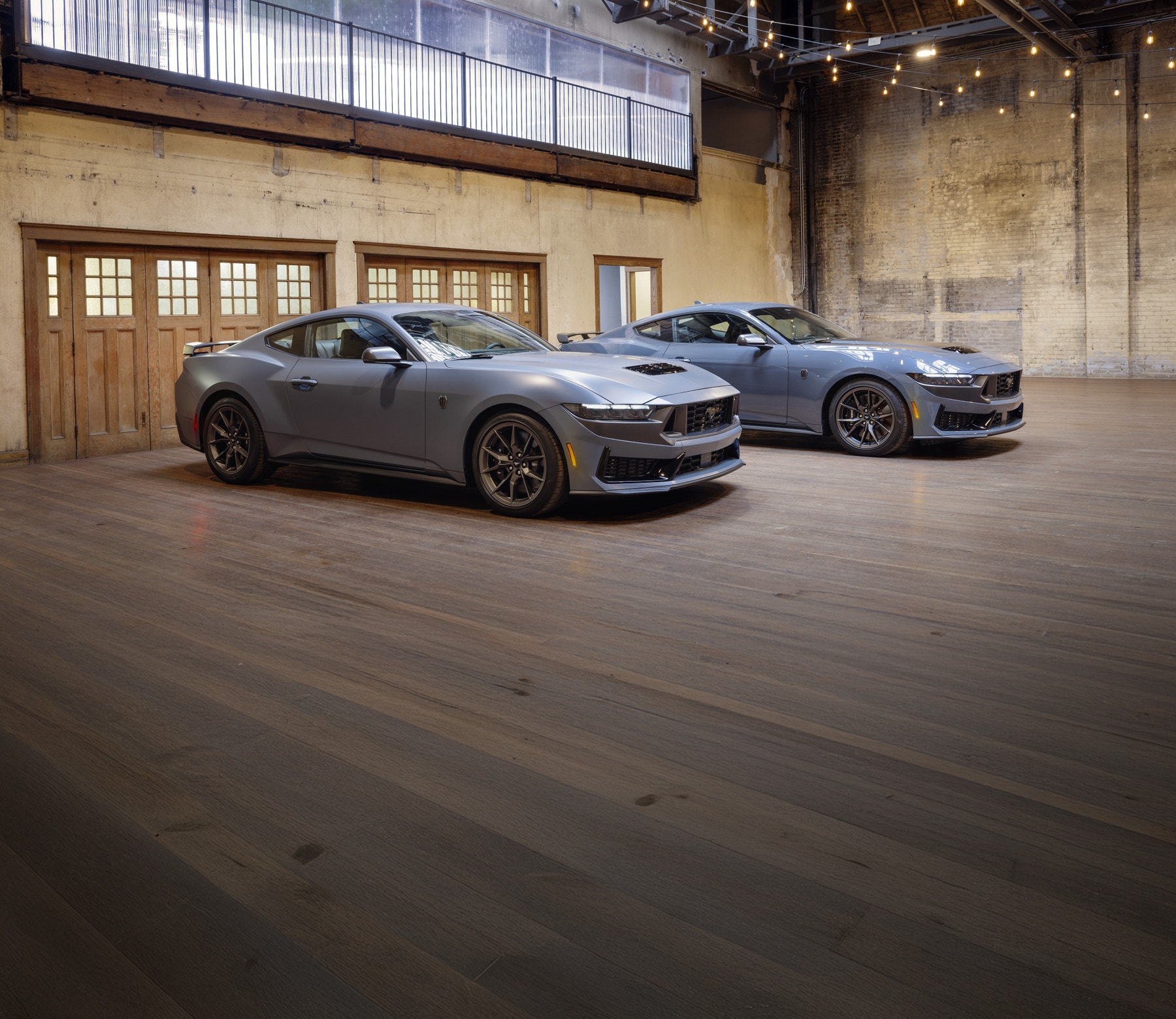
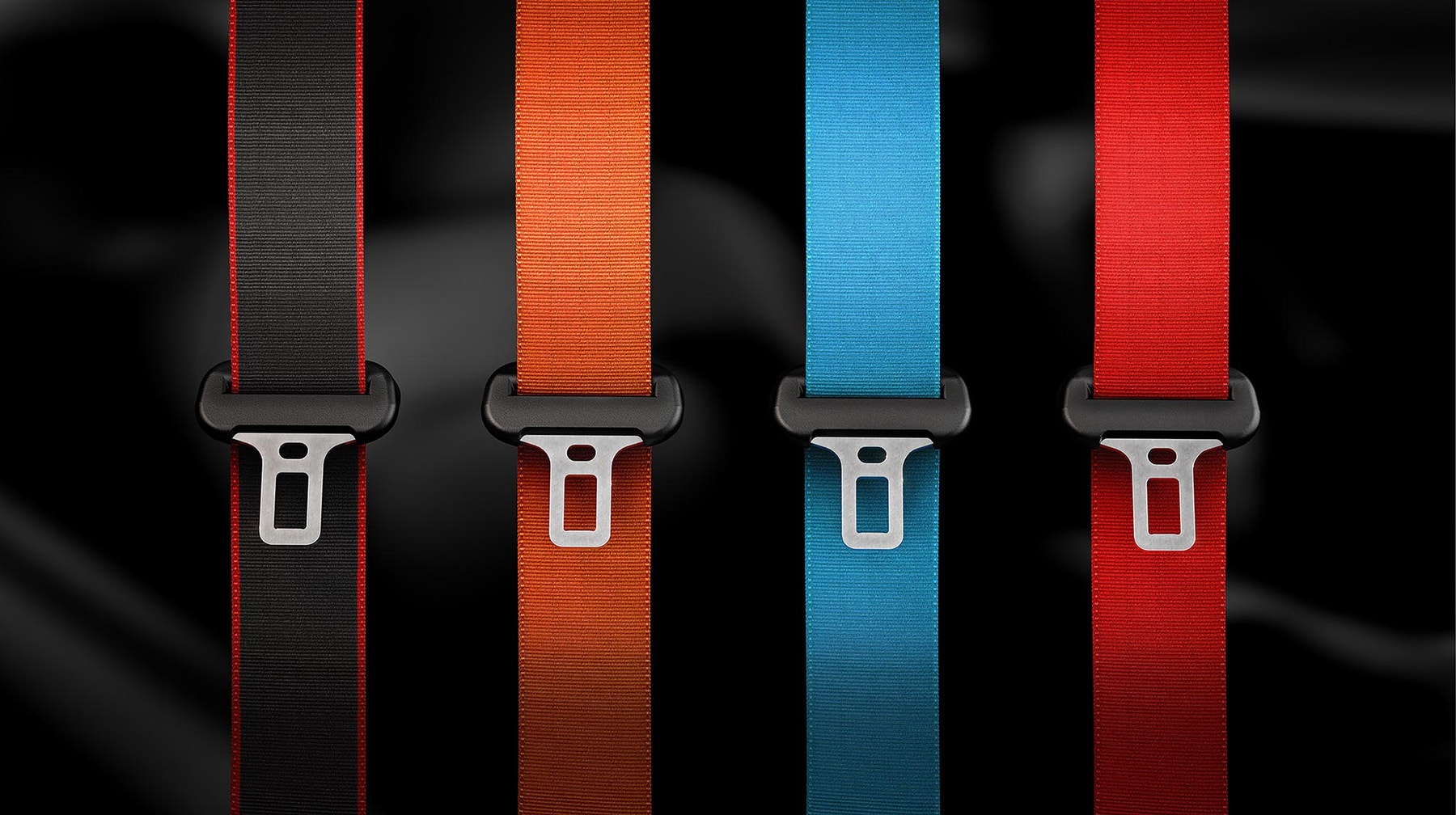
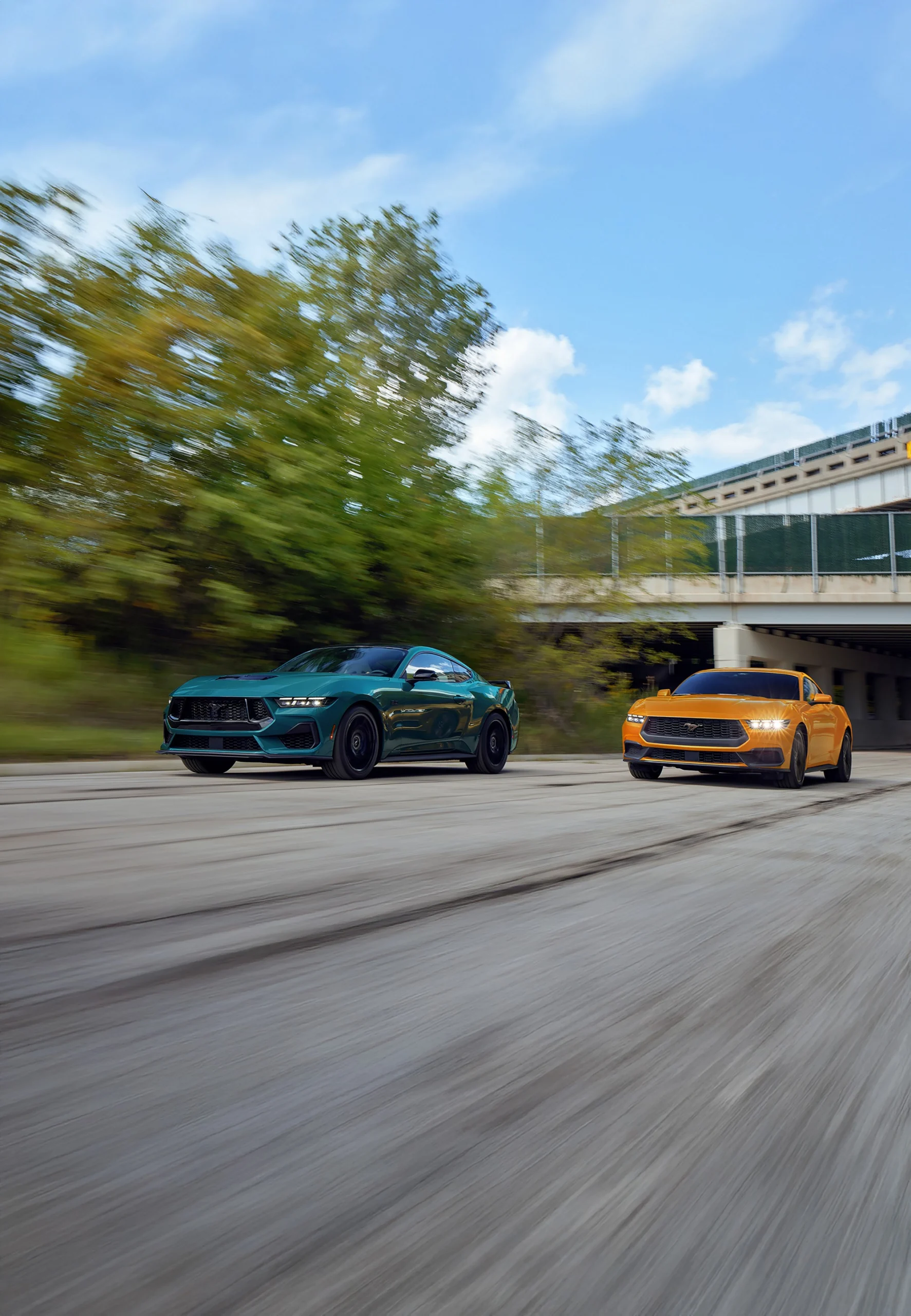
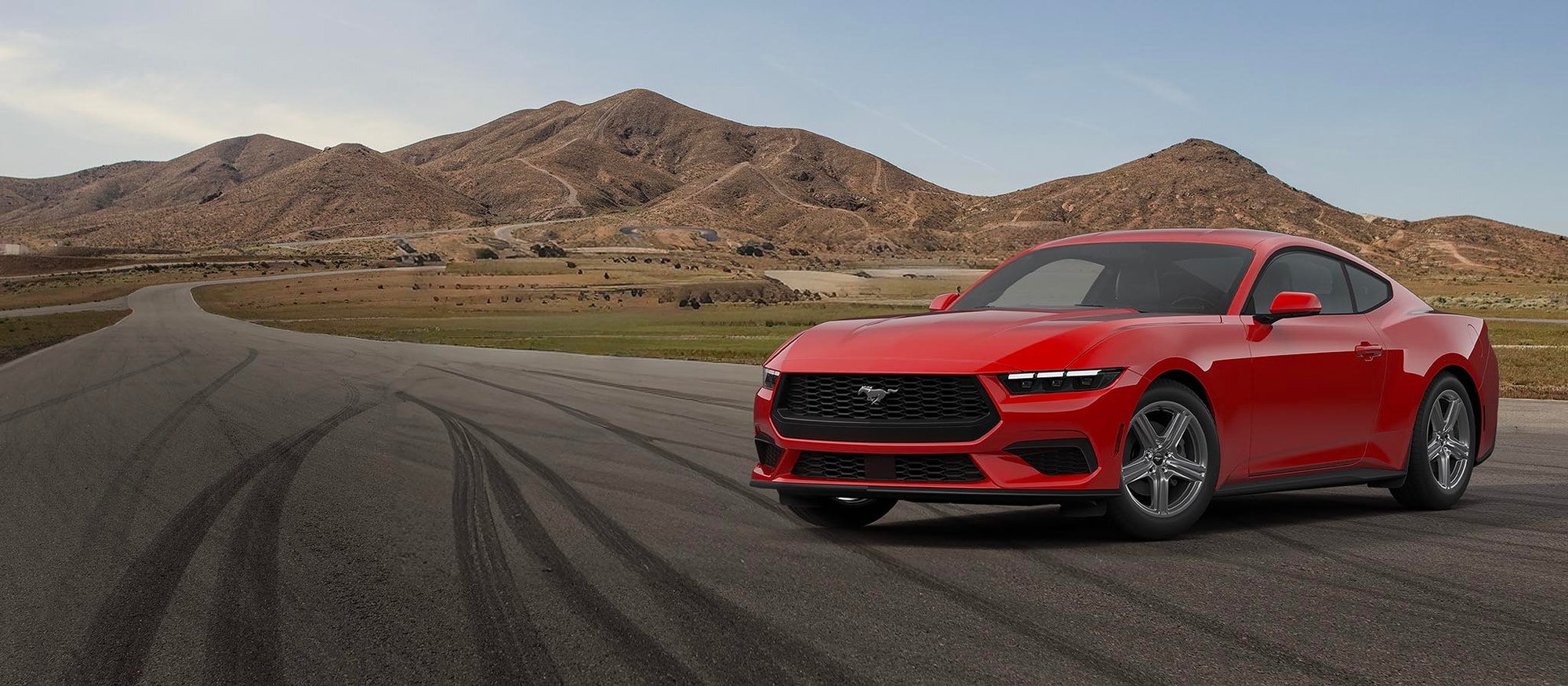
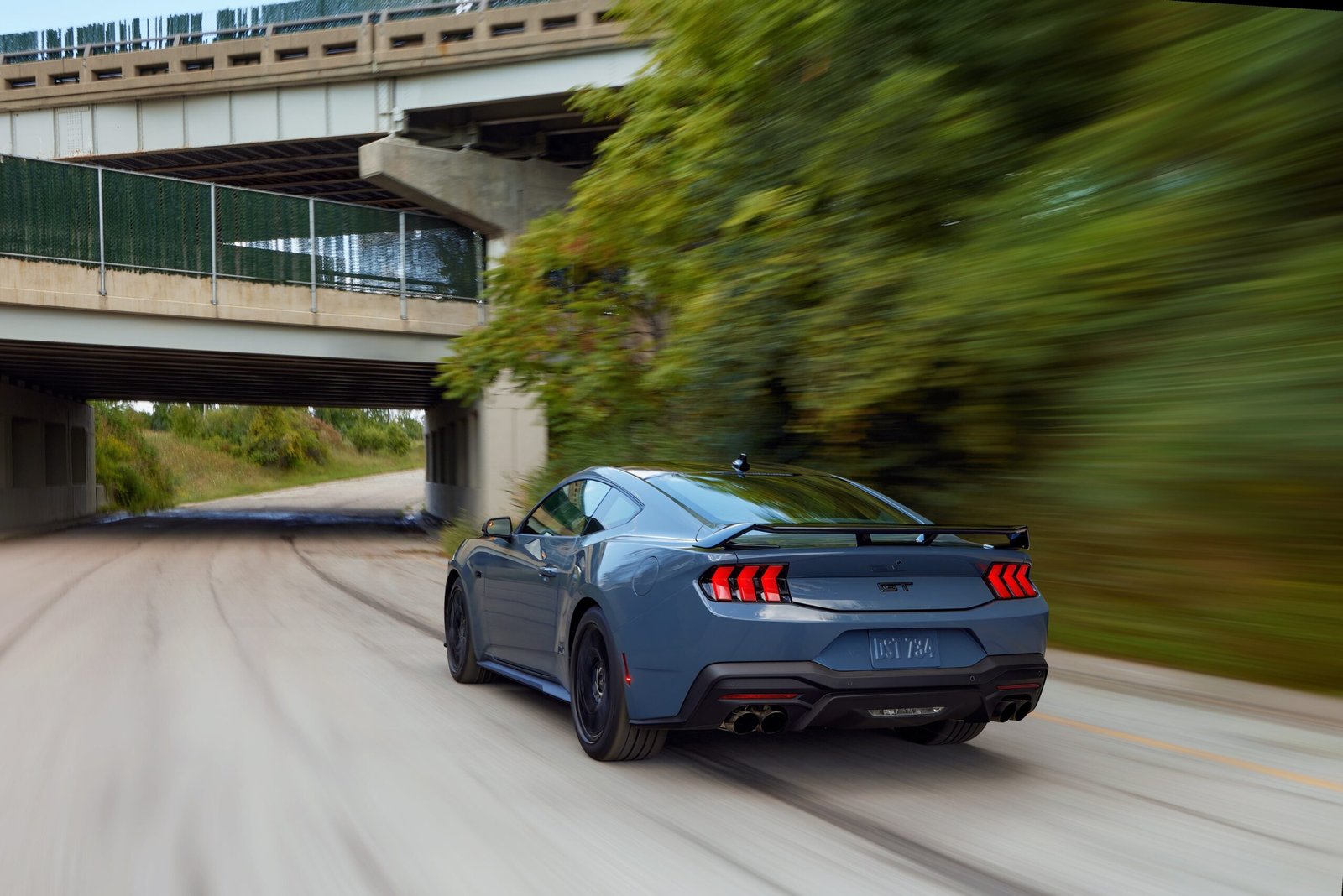
Ford’s photographs below show different 2026 configurations. A styling detail, trim feature or track display in a photograph is not proof that it is standard on every EcoBoost or GT. Photo credit: Ford Motor Company; optional equipment and extra-cost colors may be pictured. Select a photo to view it larger.