
Affiliate disclosure: Ultimate Stangs may earn a commission if you buy through links in this article. Our recommendations are based on documented equipment requirements; we have not performed a head-to-head cleaning test of these products.
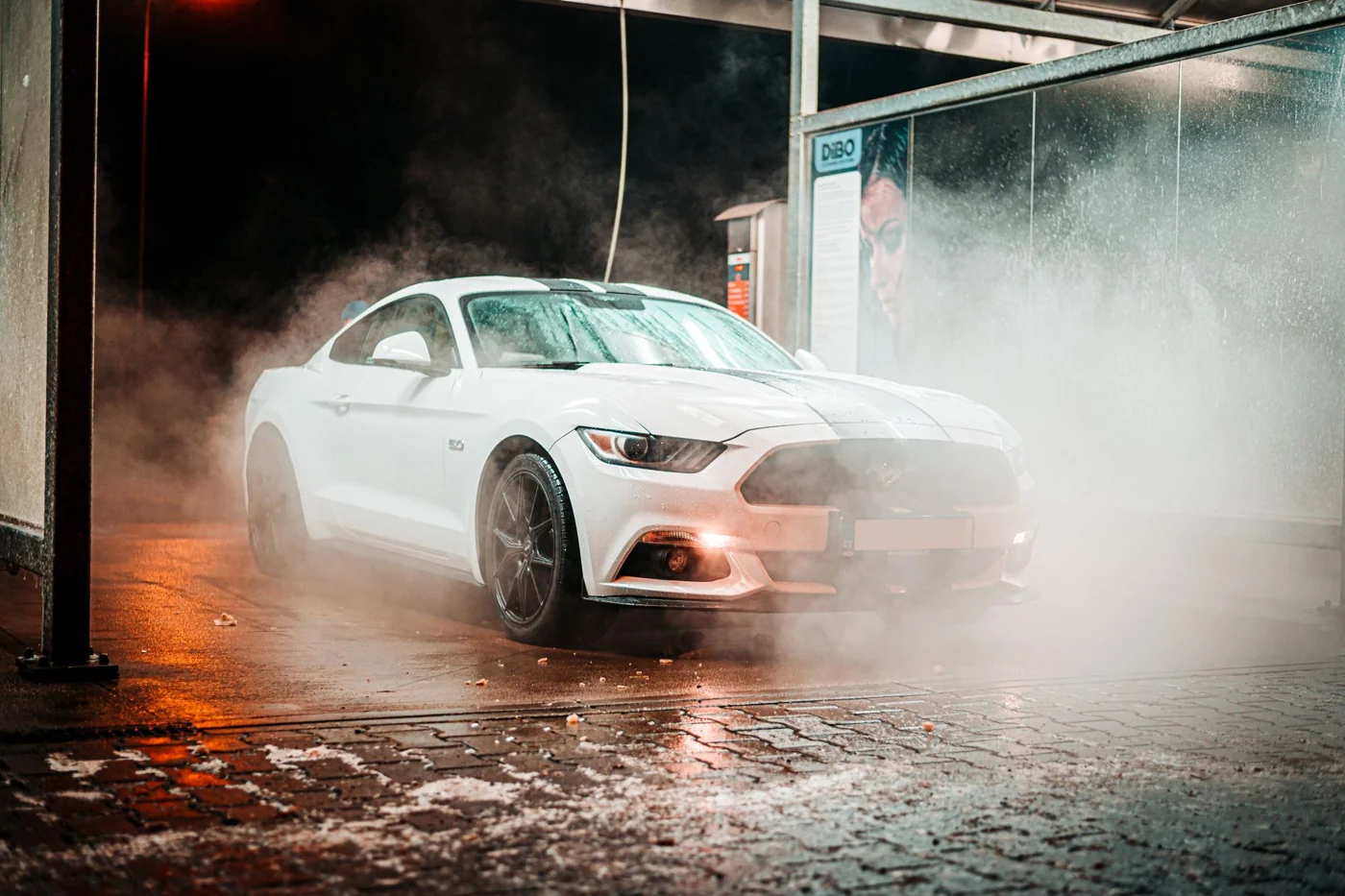
A foam-covered Mustang makes a great photo, but choosing a wash tool starts with a less dramatic question: Are you connecting to a garden hose or a pressure washer? That answer matters more than the size of the foam cloud.
A garden-hose foam gun is the simpler starting point when you want fewer connections and less equipment to store. A pressure-washer foam cannon makes more sense when you already own a compatible washer and want a dedicated foaming step. Neither device replaces careful washing or makes every finish safe to pressure wash.
The quick answer: choose the tool that fits your setup
- Garden hose and a modest equipment budget: start with a foam gun. You do not need to buy a pressure washer just to add foam to a wash.
- Compatible pressure washer already in the garage: consider a foam cannon after checking flow, operating pressure, and the wand fitting.
- Stripes, a wrap, matte paint, paint protection film, or older refinished panels: establish the finish-specific washing instructions first. The safer choice may be a gentler hand-wash routine rather than more equipment.
What is the difference between a foam gun and a foam cannon?
A foam gun uses your garden hose
A conventional hose-end foam gun combines incoming water with wash solution and air to spread suds over the car. It is an application tool, not a pump that turns a garden hose into a pressure washer. Its appeal is a straightforward setup: connect the hose, prepare the solution as directed, and apply it.
For a Mustang owner with limited garage space, that simplicity can be the deciding advantage. There is no separate washer to move into position, power, or put away. You still need clean wash media and a plan for rinsing and drying.
A foam cannon uses a pressure washer
A conventional pressure-washer foam cannon uses the washer’s water supply through its mixing assembly to apply foamed shampoo. It adds a bottle-and-nozzle assembly to a system that already includes a pump, hose, gun, and wand. Foam output depends on the complete setup and the detergent instructions, not just the accessory’s name.
A cannon is worth considering if a washer is already part of your routine. It is harder to justify buying an entire machine solely because a video shows dramatic foam. The extra connections, setup time, storage, and equipment care belong in the decision too.

Foam gun vs. foam cannon: side-by-side comparison
| Decision | Garden-hose foam gun | Pressure-washer foam cannon |
|---|---|---|
| Water source | Standard garden hose | Compatible pressure washer |
| Additional equipment | Hose and suitable hose connection | Washer, suitable water supply, hose, gun/wand, and matching connector |
| Setup and storage | Fewer separate components to handle | More components to connect, maintain, and store |
| Budget decision | Compare the accessory with the hose equipment you already own | Include the washer and any required adapters if you do not already own them |
| Best starting point | Owners who value a simple home-wash setup | Owners with a suitable washer who want a separate foaming stage |
| What neither guarantees | A scratch-free or completely touchless wash | A scratch-free or completely touchless wash |
Two documented options for a Mustang wash setup
The following Chemical Guys products serve different equipment setups. They are wash accessories, not vehicle-specific parts: compatibility depends on your hose or washer and the finish-care instructions for your Mustang. A product appearing here does not establish that every pressure washer or every coating is compatible.
The Foam Blaster 6 Pro is the garden-hose choice. The Max Foam 8 requires a pressure washer; its documented range is 500–3500 PSI, with at least 1.4 GPM and a standard 1/4-inch quick-connect. Confirm the actual connection rather than assuming a supplied adapter fits a proprietary wand. Those numbers describe the accessory’s requirements—not an instruction to spray your Mustang at that pressure.
Before ordering, check current product details, pricing, shipping, and return terms with the merchant. Include the cost of any required washer or adapter when comparing complete setups.
Which setup is better for your budget?
If you own only a garden hose
Keep the shopping list short. A foam gun lets you add a soap-application stage without committing to a pressure-washer system. Before buying, check that your hose connection is usable and that you have a practical place to wash, rinse, and dry the car. Spending on a more elaborate applicator will not solve dirty wash media or a rushed drying routine.
If you already own a pressure washer
Write down the exact washer model and compare its working pressure and rated flow with the cannon requirements. Check the connection at the end of the wand, not just the connection between the washer and its high-pressure hose. If the figures or fittings are unclear, ask the equipment manufacturer before buying adapters.
Treat the cannon as one stage in an existing routine. Consider how often you will use it and whether the additional setup is convenient enough that you will actually follow through. A tool that stays on the shelf does not improve a wash.
If you are starting from scratch
Compare complete setups instead of accessory prices alone. A washer may also be useful for other permitted jobs, but that is a separate purchasing decision. For the Mustang, prioritize a repeatable process, suitable shampoo, clean wash tools, and proper drying before deciding that denser-looking foam is essential.
Safe washing matters more than the foam tool
Ford’s Mustang care guidance recommends cool or lukewarm water and a neutral-pH car shampoo, warns against strong household detergents, and advises against washing a hot vehicle in strong sunlight. Its guidance also treats stripes and graphics separately. Read the manual for your exact model year rather than borrowing a pressure limit from another Mustang generation.
The washer accessory’s maximum rating is not a paint-care setting. Follow your vehicle’s restrictions on pressure, nozzle pattern, distance, and water temperature. Check separate instructions for aftermarket graphics, film, wraps, coatings, and repaired paint. If you cannot reconcile those instructions with your equipment, use the approved hand-wash method or get advice from the finish installer.
- Inspect and prepare. Work on cool panels in shade. Look for loose trim, lifting graphic edges, damaged paint, or areas with special care instructions before applying water or detergent.
- Prepare the wash solution. Follow the shampoo’s directions for the specific applicator. A mixture intended for a wash bucket is not automatically the correct bottle dilution. Do not mix unrelated cleaners to chase thicker foam.
- Rinse loose contamination. Use a method permitted for the car’s finish. Keep wheel-cleaning tools separate from the tools that will touch painted panels.
- Apply and manage the foam. Follow the soap’s dwell instructions and keep it from drying on the surface. Work in smaller sections when conditions make that difficult.
- Complete a careful contact wash when needed. Use clean wash media, work from the upper panels downward, and rinse the mitt before reloading it with shampoo. Replace dirty rinse water instead of continuing to spread it around.
- Rinse and dry. Remove remaining shampoo, then use clean, suitable drying towels. Do not let the photography-friendly foam become dried residue on the paint.
For more on the complete wash routine and supplies, read our Chemical Guys car-wash and maintenance guide. This article focuses on choosing the applicator; that guide provides broader context for the rest of the wash.
Watch the two equipment types in use
This official Chemical Guys demonstration helps show the difference between hose-powered and pressure-washer setups. It features Roadie and Foam Blaster Easy models, not the two TORQ products recommended above; use it to understand the equipment categories, not as a test of those exact products.

Watch the demonstration on Chemical Guys’ YouTube channel if the embedded player is unavailable.
Frequently asked questions
Can you use a foam cannon without a pressure washer?
A conventional pressure-washer foam cannon such as the Max Foam 8 needs a compatible pressure washer. Connecting a garden hose does not supply the required system. Choose a hose-end foam gun for a garden-hose setup; pump-up and powered foam sprayers are separate product categories with their own requirements.
Will a foam gun turn my garden hose into a pressure washer?
No. It applies a foamed wash solution using the hose supply. It does not add the pump system of a pressure washer, so choose it for the convenience of hose-based washing rather than expecting pressure-washer behavior.
Does thicker foam mean a cleaner or safer Mustang?
Appearance alone cannot establish cleaning performance or paint safety. Detergent choice, contamination, dwell time, rinsing, and clean contact-wash tools still matter. Do not increase detergent concentration beyond its instructions simply to imitate a video.
Can I use either tool on stripes, matte paint, or a wrapped Mustang?
Only within the instructions for the actual finish and equipment. Do not assume a gloss-finish shampoo or a pressure-wash method is appropriate for a matte wrap, film, or lifting graphics. Check the vehicle manual and the finish manufacturer or installer before proceeding.
Do I still need a wash mitt after foaming?
Foaming is not a guarantee that adhered road film has been removed. Follow the wash-product instructions and assess the surface. When a contact wash is needed, use clean, suitable wash media rather than pressing dirt across the paint with a contaminated mitt.
What should I buy first?
Choose the setup you can use correctly with the equipment and washing space you have. For a garden hose, consider the Foam Blaster 6 Pro. For an already-compatible pressure-washer system, consider the Max Foam 8. If either setup is uncertain, resolve the connection and finish-care questions before ordering.

The right choice for your Mustang
Choose the applicator that works with the equipment you already own, then put the care of your Mustang’s finish first. A compatible setup, the right shampoo, clean wash media, and careful rinsing matter more than putting on a foam show.
Sources and media credits
- Chemical Guys Foam Blaster 6 Pro and Max Foam 8 specifications and instructions: equipment requirements. Product images supplied through authenticated CJ affiliate product creatives for these exact products.
- Chemical Guys foam-gun and foam-cannon overview and two-bucket washing guide: equipment categories and washing method. Manufacturer demonstrations are not independent test results.
- Ford 2020 Mustang Owner’s Manual, Vehicle Care, printed pages 257–259: factory care guidance. Consult your own model-year manual for applicable limits.
- Featured photograph: Amir Hossein Bakhtiari on Unsplash, used under the Unsplash License; cropped to landscape and optimized as WebP. Illustrative Mustang photograph, not a photograph of our testing or of either recommended tool.